
There are destinations you photograph.
And then there are destinations that photograph you back — that leave something permanent in your memory.
Ghana belongs firmly in the second category.
You don’t come here only for beaches or castles.
You come for warmth that feels unscripted.
For history that refuses to whisper.
For culture that is not staged — but lived.
This is why Ghana matters.
1. The Welcome Is Not Marketing — It’s Cultural DNA
Ghana’s reputation for friendliness is not a tourism slogan.
It’s structural.
From Accra’s street vendors to village elders in the Central Region, greeting is ritual. Conversation is valued. Hospitality is expected.
English is the official language, which lowers barriers immediately. You are able to:
-
Ask questions without translation stress
-
Navigate transport with clarity
-
Engage deeply with guides and locals
That accessibility creates emotional space — especially for first-time visitors to West Africa.
But the real difference is tone. Ghana doesn’t overwhelm. It opens.
2. Why Cape Coast Is Not Just a Stop — It Is a Turning Point
Many itineraries list Cape Coast casually.
They shouldn’t.
The town of Cape Coast is where Ghana’s story becomes personal.
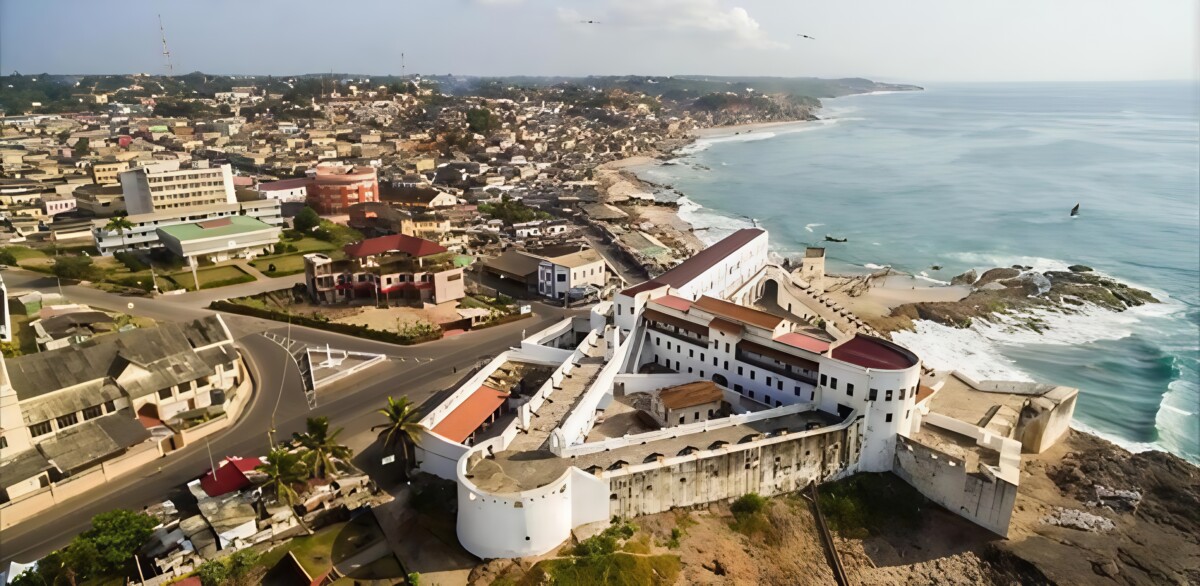
Cape Coast Castle
A UNESCO World Heritage Site
(See: UNESCO World Heritage Centre – Forts and Castles of Ghana)
Walking through the dungeons is not passive tourism. It is heavy, slow, and confronting. The air inside still feels compressed. The “Door of No Return” reframes history from abstract tragedy to human reality.
Then, 20 minutes away:
Elmina Castle
Built in 1482. The oldest European structure in sub-Saharan Africa.
At sunset, however, something shifts.
Stand at Elmina Harbor around 5:45 PM.
Watch fishing boats return.
See boys dive into the water.
Hear laughter bounce off colonial walls.
History and present coexist. That tension is what makes Cape Coast unforgettable.
External reference:
UNESCO – Forts and Castles, Volta, Greater Accra, Central and Western Regions
https://whc.unesco.org/en/list/34/