
There are places you visit.
And there are places that answer a question you didn’t know you were carrying.
Ghana is the latter — especially for travelers tracing history, identity, and ancestral connection.
Ghana’s history is not confined to museums. It lives in coastlines, courtyards, riverbanks, and storytelling circles. It is a country where memory has geography.
For diaspora travelers, this is not simply heritage tourism. It is layered — emotional, reflective, grounding.
Cape Coast: Not Just a Site, But a Turning Point
If there is one place that reframes everything, it is Cape Coast.
Walking into Cape Coast Castle shifts the atmosphere immediately. The corridors narrow. The light dims. The air changes.
This is where captives were held before forced departure during the transatlantic slave trade. Standing inside the dungeons does not feel like reading history. It feels like stepping inside it.
Then, a short drive away:
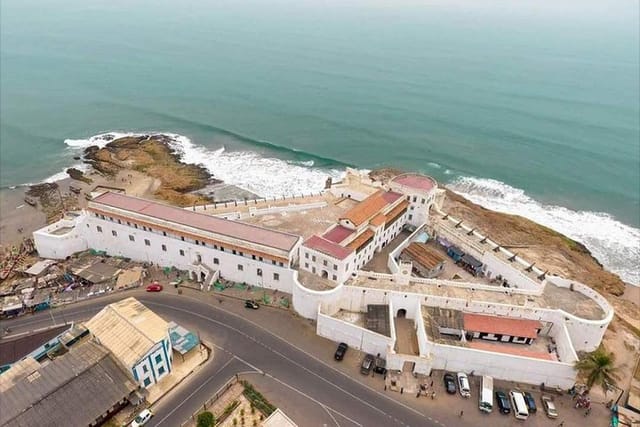
The oldest European structure in sub-Saharan Africa. Its white walls overlook a harbor filled with bright fishing boats — life continuing beside history.
Sunset at Elmina Harbor is one of Ghana’s most complex moments:
- Boys dive into water.
- Fishermen pull nets.
- The castle stands quietly behind them.
Past and present share the same frame.
For a deeper cultural background, link internally to:
“Exploring Cape Coast Castle & the Door of No Return”
Assin Manso: The River of Last Bath
Inland from the coast lies Assin Manso Ancestral Slave River Park.
Here, enslaved Africans were washed before being marched to the coast. Today, the riverbank is quiet. Visitors leave flowers. Some leave soil from countries across the Atlantic.
This is not a tourist stop. It is a reflective pause.
Before the Castles: Powerful Kingdoms and Cultural Systems
Ghana’s story does not begin with colonization.
The Ashanti Kingdom in present-day Kumasi built complex governance, gold trade networks, and artistic traditions long before European arrival.
These layers remind diaspora travelers that ancestry is not only about loss — it is also about sovereignty, artistry, and resilience.
How Ghana Feels to First-Time Diaspora Visitors
The first visit often carries:
- Emotional intensity
- Sensory overwhelm
- A feeling of recognition without familiarity
English being the official language helps ease the transition. Conversations flow. Questions are answered. Guides speak in layered context rather than rehearsed lines.
Ghana’s warmth is not performance. It is cultural reflex.
How It Feels to Return
On the second trip:
- You greet before asking questions.
- You understand why elders are greeted first.
- You notice rhythm instead of only landmarks.
It becomes less about seeing and more about belonging.
Building a Meaningful 5–7 Day Heritage Flow
Day 1 – Accra Context
- Kwame Nkrumah Memorial Park
- W.E.B. Du Bois Memorial Centre
- Jamestown cultural walk
Day 2 – Cape Coast & Elmina
- Early departure (6 AM recommended)
- Kakum canopy walk at Kakum National Park (cooler morning temperatures)
- Afternoon castle visit
- Sunset harbor reflection
Day 3 – Assin Manso & Beach Recovery
- Morning inland reflection
- Afternoon coastal decompression
Day 4 – Kumasi & Ashanti Heritage
- Manhyia Palace Museum
- Kente weaving village
- Cultural storytelling
Day 5 – Cultural Continuity
- Traditional naming ceremony
- Local craft markets
- Culinary immersion

Practical Travel Advice (Often Missed)
Dress
- Modest clothing for heritage sites
- Light breathable fabrics
- Closed shoes for fort interiors
Photography
- Ask before photographing people
- Avoid flash in dungeons
- Capture atmosphere, not spectacle
Pacing
- Do not rush castle tours
- Leave quiet time after emotional sites
- Hydrate — coastal heat is real
Why This Journey Matters
Ghana is not selling nostalgia.
It is offering connection.
The castles, the rivers, the markets, the drumming, the laughter — they form a continuum between past and present.
For diaspora travelers especially, this is not tourism.
It is conversation.
And the most powerful journeys are the ones where the land speaks back.
I am not African because I was born in Africa but because Africa was born in me.
Kwame Nkrumah