Book Heritage Trail Tour
Walk the paths your ancestors walked — guided heritage tour
View Packages →
20 Historical Places in Ghana Every Visitor Should | Akwaaba
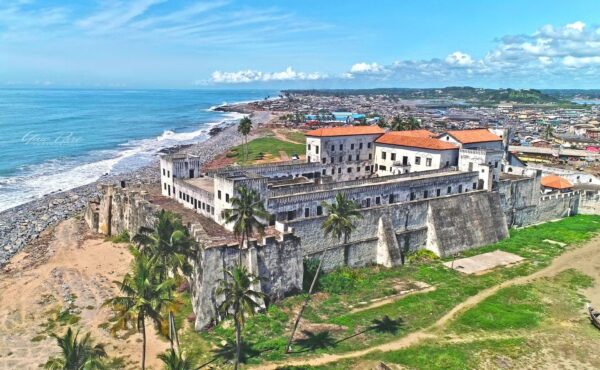
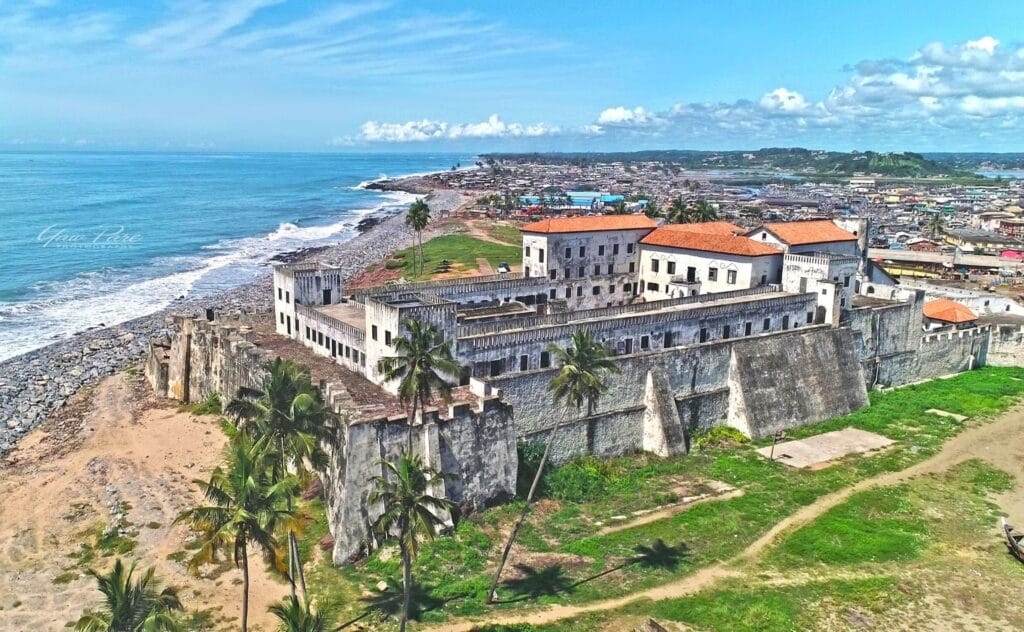
Cape Coast Castle, Ghana — UNESCO World Heritage slave fort with palm trees along the Atlantic coast
Complete Guide · 20 Sites

20 Historical Places in Ghana That Changed the World

15 min read Last updated March 2026 by Akwaaba Travel Experts

Ghana holds more documented history per square kilometer than almost anywhere on the African continent. Two continents' worth of empires built, traded, and were torn apart here. This is the country that gave the transatlantic slave trade its most notorious ports, where the Ashanti Kingdom held off British colonizers for nearly a century, and where African independence first found its voice on the continent in 1957. These 20 sites are where that history became tangible — stone walls, sacred ponds, royal palaces, and open-air sites where the weight of what happened refuses to be buried.

Why Ghana's History Matters

Ghana's historical record is unusual in its range. The country sits at the intersection of three distinct historical forces: the medieval West African kingdoms that controlled trans-Saharan gold and salt trade; the transatlantic slave trade that devastated its coastal populations from the 15th century onward; and the 20th-century independence movement that made it the first sub-Saharan African country to shake off colonial rule.

What that means practically is that visiting Ghana's historical sites requires a different kind of preparation than most heritage tourism. Some sites are celebratory — the Manhyia Palace, the Larabanga Mosque, the kente weavers of Bonwire. Others are confrontational in the most necessary way. The slave castles of the Central Region and the Pikworo Slave Camp in the far north ask you to hold something heavy and not put it down too quickly. The best visitors come with some background knowledge and leave the itinerary a little loose.

We've organized the 20 sites by region. Most visitors spend 3 to 10 days covering them, depending on how deeply they want to go. Each entry includes practical logistics — because knowing that Larabanga is 11 hours from Accra shapes how you plan, and knowing that Assin Manso is free but deserves a full hour shapes how you feel about it.

Cape Coast & Central Region

Book Heritage Trail Tour
Walk the paths your ancestors walked — guided heritage tour · SanlamAllianz insurance + on-ground Accra team.
See Prices & Dates →

The Central Region's coastline holds the highest concentration of colonial-era slave forts anywhere in the world. At one point, 37 forts and castles operated within a 300-mile stretch of what the Europeans called the Gold Coast. Six of the most significant are accessible today.

1 Cape Coast Castle

Cape Coast Castle is one of the most documented sites of the transatlantic slave trade, and visiting it still manages to exceed whatever you've read beforehand. Built by Swedish traders in 1653 as a timber and gold post, it expanded under British colonial control into the largest slave-trading fort in West Africa. At its operational peak in the late 1700s, the castle processed somewhere between 1,000 and 1,500 enslaved people every month — held in pitch-dark, airless dungeons below the governor's well-appointed quarters.

View from Cape Coast Castle looking out over the Atlantic Ocean, Ghana

The UNESCO World Heritage designation (shared with Elmina in 1979) brought a level of preservation and institutional attention that makes Cape Coast one of the more thoroughly interpreted sites in West Africa. The guides here are genuinely exceptional — many have spent years studying the history and have personal family connections to the region. Don't skip the guided tour. The castle's layout is deliberately labyrinthine, and the context matters enormously.

The Door of No Return, the small opening in the back wall that overlooks the Atlantic, is where enslaved people stepped onto waiting boats for the crossing. In 1998, during President Clinton's visit, it was symbolically renamed the Door of Return — an acknowledgment of the African diaspora's right to come home. For many visitors, standing in that doorway is the reason they made the trip to Ghana. Give yourself time there.

For a deeper look at the castle's history and what to expect on your visit, read our Cape Coast Castle complete guide.

Visit Details — Cape Coast Castle

📍 Location

Cape Coast, Central Region

🎟 Entry Fee

GHS 80 adults / ~$10
GHS 20 Ghanaian citizens

🕐 Opening Hours

9am – 5pm daily
Last tour 4:30pm

🚗 From Accra

165 km · ~3 hours by road

Best Time

Before 10am — tour groups arrive late morning

2 Elmina Castle

Elmina Castle has the distinction of being the oldest European-built structure in sub-Saharan Africa. The Portuguese completed it in 1482 — a decade before Columbus reached the Americas — originally as a trade post for gold, pepper, and ivory. It changed hands to the Dutch in 1637 and eventually became one of the largest processing points for enslaved Africans in the entire transatlantic trade.

Elmina Castle walls, Ghana — the oldest European building in sub-Saharan Africa

Elmina is roughly 15 kilometers west of Cape Coast and most visitors combine both on the same day. That said, treating them as a quick double-header is a mistake. Elmina has its own distinct character — it's slightly less touristically polished than Cape Coast, which some visitors find more powerful. The town surrounding the castle is a working fishing harbor, and the contrast between the boats heading out for the day's catch and the castle walls above them is something you won't shake easily.

The female slave dungeon at Elmina is particularly harrowing. Enslaved women were held there, and the castle's records make clear how the governor used proximity to that dungeon as a mechanism of power. The guides explain this without euphemism, which is the right call.

Visit Details — Elmina Castle

📍 Location

Elmina, Central Region

🎟 Entry Fee

GHS 80 adults
GHS 20 Ghanaian citizens

🕐 Opening Hours

9am – 5pm daily

🚗 From Accra

180 km · ~3.5 hours by road

Best Time

Combine with Cape Coast — allow a full day

3 Fort Amsterdam (Abandze)

Fort Amsterdam doesn't have the polished visitor infrastructure of Cape Coast or Elmina, which is exactly why it's worth going. Built by the British around 1631 on the ruins of an earlier Dutch trading post, it sits on a small headland above the village of Abandze, and today it's partly in ruins — walls missing, vegetation reclaiming corners, the Atlantic wind doing what it wants.

Fort Amsterdam at Abandze, Central Region Ghana — restored battlements with cannons of the 17th-century slave fort

There's something about Fort Amsterdam's deteriorated state that makes the history feel less curated. The original fort was one of the earliest trading posts on the Gold Coast, predating the massive expansion of the slave trade, and its remains carry that sense of long, layered occupation. A local guide from the village will walk you through the site and explain the connection between the fort and the communities around it. Pay them well — the local knowledge here is not something you'll find in any official guide.

It's a quieter stop on the Central Region circuit and pairs well with a morning at Elmina followed by an afternoon here and then down to Assin Manso.

Visit Details — Fort Amsterdam

📍 Location

Abandze, Central Region

🎟 Entry Fee

GHS 30 · donation appreciated

🕐 Opening Hours

9am – 4pm daily

🚗 From Accra

~130 km · ~2.5 hours

Best Time

Afternoon — combine with a Central Region day trip

4 Fort St. Jago (Coenraadsburg)

Fort St Jago overlooking Elmina, Central Region Ghana — Dutch hilltop fortification built in 1666 to defend Elmina Castle
Fort St Jago, viewed from Elmina Castle

Fort St. Jago sits on a hill directly above Elmina Castle — positioned there deliberately by the Dutch in 1660 to defend the lower castle from land attacks, since sea assaults were the lesser threat. From the hilltop, you look straight down onto Elmina's rooftops and across the Atlantic. It's one of the better vantage points in the entire Central Region and the view alone justifies the short climb.

The fort itself is relatively small and less interpreted than the main castles, but that's not the point of coming here. The relationship between the two structures — one controlling the coastline from sea level, one watching it from above — tells a story about how seriously European powers took the Gold Coast as a commercial and strategic prize. Your Elmina ticket covers entry to St. Jago, so there's no reason to skip it.

Visit Details — Fort St. Jago

📍 Location

Elmina, above the castle, Central Region

🎟 Entry Fee

Included with Elmina Castle ticket

🕐 Opening Hours

9am – 5pm daily

🚗 From Accra

~180 km · 3.5 hours (same trip as Elmina)

Best Time

Late afternoon for best light over the harbor

5 Assin Manso Ancestral Slave River

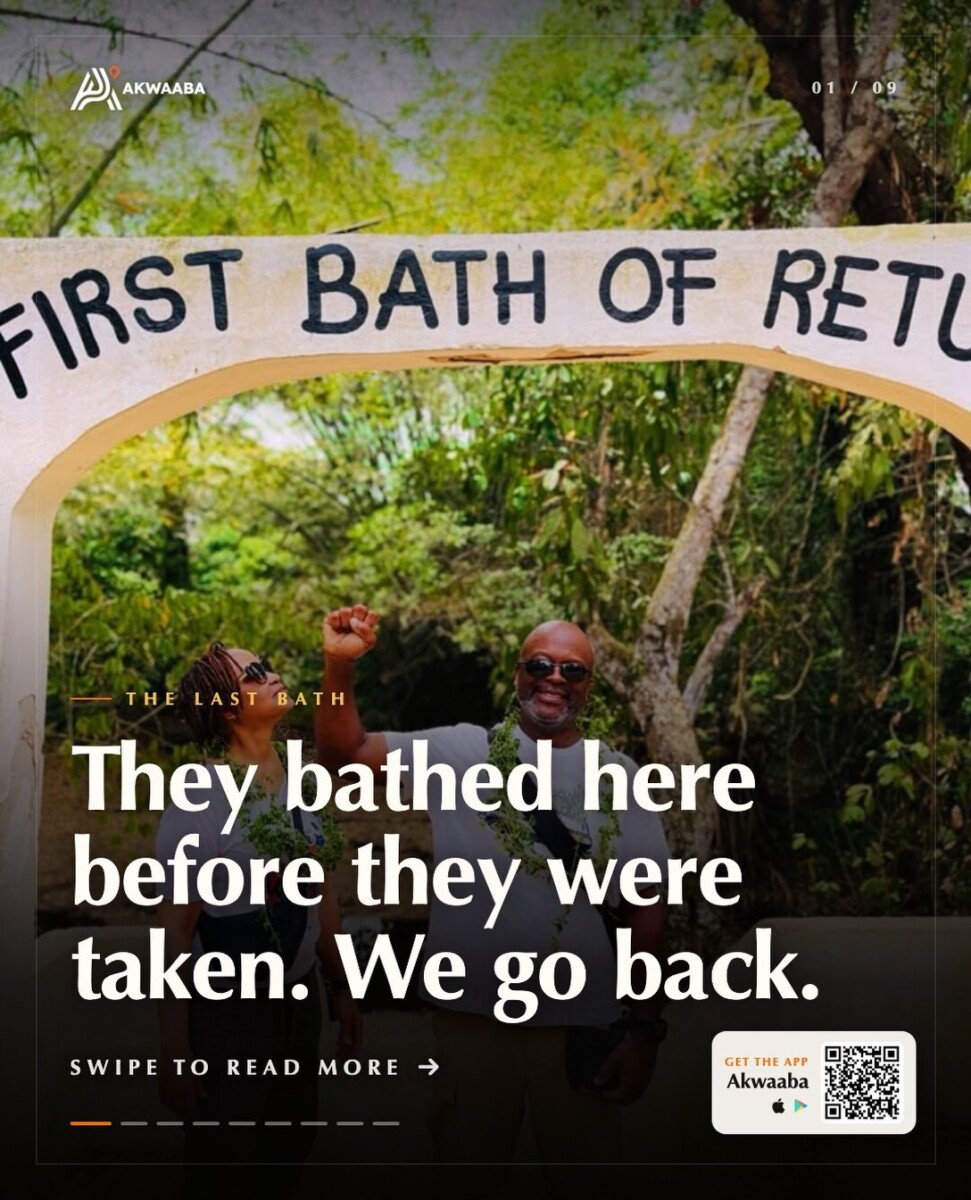
Assin Manso is not a building or a fort. It's a stretch of river in the Central Region where enslaved people were brought for what their captors recorded as a "last bath" before the final march to the coastal castles and the ships beyond. For many, it was the last time they touched Ghanaian soil, drank Ghanaian water, or saw any terrain they recognized.

Welcome sign at Assin Manso Slave River Site, Central Region Ghana —
Welcome sign at Assin Manso Slave River Site, Central Region Ghana — "Never Again" memorial honoring victims of the transatlantic slave trade

The site today is quiet and largely natural — a path through the trees, the river, plaques explaining the history. There's no dramatic interpretation, no audio guide. What's here is what was always here: the river, and the knowledge of what happened at its banks. For members of the African diaspora making a return trip to Ghana, Assin Manso is often the most emotionally significant stop on the entire journey. Several notable diaspora figures, including Jesse Jackson and Louis Farrakhan, have visited for formal ceremonies at the site.

Two graves have been added in recent years — one for a repatriated enslaved person from Jamaica, one from the United States — giving the site an additional layer as a place of literal homecoming and burial. Visit without a tight schedule. This is not a 20-minute stop.

Visit Details — Assin Manso Ancestral Slave River

📍 Location

Assin Manso, Central Region

🎟 Entry Fee

Free · donations gratefully received

🕐 Opening Hours

Open daily · no fixed hours

🚗 From Accra

~150 km · ~2.5 hours; en route to Cape Coast

Best Time

Morning — before the midday heat. Allow 45–90 min

6 Kakum National Park

Kakum is primarily known today as a rainforest canopy walk — seven rope bridges strung between the treetops at 30 meters, one of the more physically memorable experiences in Ghana. But the park also has a colonial botanical history that sits alongside the conservation story. The forest was recognized by British colonial administrators in the early 20th century as worth preserving, partly because the timber extraction and agricultural clearance that was consuming the region's forests was being done in the name of colonial commerce. The park's establishment in 1932 was as much about economic resource management as ecological protection.

Kakum National Park canopy walkway, Ghana — suspended bridges through the rainforest

For visitors doing the Central Region historical circuit, Kakum works well as a lighter counterpoint to the weight of the slave castles. It's about 30 minutes inland from Cape Coast, and a morning in the canopy followed by an afternoon at Cape Coast Castle is a frequently used combination. The birdwatching here is genuinely exceptional if that's your interest.

Visit Details — Kakum National Park

📍 Location

Kakum, Central Region (30 min from Cape Coast)

🎟 Entry Fee

GHS 130 (includes canopy walk)

🕐 Opening Hours

7am – 5pm daily

🚗 From Accra

~160 km · ~2.5 hours

Best Time

Early morning for wildlife; weekdays to avoid crowds

Ashanti Region

The Ashanti Kingdom was one of the most powerful political entities in 19th-century West Africa. It controlled the gold trade, fielded a military capable of defeating British forces on multiple occasions, and built a royal culture of extraordinary sophistication — expressed in gold regalia, kente weaving, and institutions of governance that survive in adapted form today. The region around Kumasi, the Ashanti capital, holds the physical evidence of all of this.

7 Manhyia Palace Museum, Kumasi

Manhyia Palace, Kumasi — official residence of the Asantehene and seat of the Ashanti Kingdom
Manhyia Palace Museum, Kumasi

The Manhyia Palace is the seat of the Asantehene — the king of the Ashanti people — and the current palace is a functioning royal residence as well as a museum. What's open to the public is the original colonial-era palace, built in 1925 by the British and presented to the Ashanti as part of the negotiations around the return of the exiled Asantehene Agyeman Prempeh I after 24 years of forced exile in the Seychelles. The current Asantehene, Otumfuo Osei Tutu II, lives in a newer building adjacent to it.

The museum collection covers the history of the Ashanti Kingdom with unusual directness — including the Wars of the Golden Stool, which the Ashanti fought and won against British attempts to claim the sacred stool that represents the soul of the Ashanti nation. The stool was never handed over. It still exists and remains the most sacred object in Ashanti culture today. Understanding that history makes everything else in Kumasi land differently.

While you're in Kumasi, the Okomfo Anokye Sword Site is a short drive away and pairs naturally with the palace visit — see Site 8 below.

Visit Details — Manhyia Palace Museum

📍 Location

Kumasi, Ashanti Region

🎟 Entry Fee

GHS 60 adults with guided tour

🕐 Opening Hours

9am – 5pm Mon–Sat
Closed Sunday

🚗 From Accra

~250 km · ~4 hours by road

Best Time

Morning, midweek — Kumasi can be busy on weekends

8 Okomfo Anokye Sword Site

Okomfo Anokye Sword Site at Komfo Anokye Teaching Hospital, Kumasi — sacred sword embedded in stone since 1695, never moved
Okomfo Anokye Sword Site, Kumasi

Okomfo Anokye was the legendary priest who, in the late 17th century, is said to have called down the Golden Stool from the sky and planted a sword into the earth to unite the Ashanti confederacy under Asantehene Osei Tutu I. The sword, according to tradition, cannot be removed by any human hand and has remained in place ever since. It now sits in the grounds of the Komfo Anokye Teaching Hospital in Kumasi, which was deliberately built around it.

This is a genuinely unusual historical site — a working hospital with a sword in its courtyard that has been there for more than 300 years and has resisted every recorded attempt at removal. Multiple colonial administrators apparently tried. The sword is intact. It's a small pilgrimage but a meaningful one for understanding Ashanti spiritual history and the origins of the kingdom's political unity. Expect a small entrance fee and a local guide who will give you the full story.

Visit Details — Okomfo Anokye Sword Site

📍 Location

Kumasi (Komfo Anokye Hospital grounds)

🎟 Entry Fee

Small fee paid to local guide on site

🕐 Opening Hours

Accessible during hospital hours · no formal closure

🚗 From Accra

~250 km · 4 hours (same Kumasi trip)

Best Time

Morning, combined with Manhyia Palace visit

9 Bonwire Kente Weaving Village

Master kente weaver at his loom in Bonwire, Ashanti Region — birthplace of Ghana's iconic handwoven kente cloth tradition
Kente weaver at work in Bonwire, the home of kente

Bonwire is where kente cloth as we know it originated. The village is about 20 minutes northeast of Kumasi, and it has been the center of kente production for the Ashanti for roughly three centuries. The cloth itself — those tight, brilliantly colored strips woven on narrow looms and then sewn together into the finished textile — is one of the most recognized African art forms in the world. Bonwire is where you see it being made.

Visiting isn't just a craft demonstration. Kente patterns carry specific meanings — particular combinations of colors and geometries communicate status, occasion, and identity. The weavers in Bonwire can explain what patterns mean and what occasions they're woven for. Buying directly from the village is both the most authentic and the most economical option; prices in tourist markets in Accra and Kumasi are substantially higher for significantly lower quality. Entry to the village is free; what you'll spend is on cloth.

Visit Details — Bonwire Kente Village

📍 Location

Bonwire, 20 min northeast of Kumasi

🎟 Entry Fee

Free to enter · buy directly from weavers

🕐 Opening Hours

Weavers working 7am – 6pm most days

🚗 From Accra

~270 km · combine with Kumasi day

Best Time

Weekday mornings — more weavers active, less tourist traffic

10 Asantehene's Shrine — Ejisu-Besease

Besease Asante traditional shrine, Ashanti Region Ghana — UNESCO World Heritage Site representing 13th-19th century Ashanti architecture
Besease Asante Traditional Shrine — UNESCO World Heritage

The Besease shrine, about 20 kilometers east of Kumasi, is one of the few intact examples of 19th-century Ashanti shrine architecture remaining in Ghana. It was built around 1850 and is in genuinely good condition — the mud walls, the carved wooden posts, the painted geometric decorations have been maintained by the community rather than restored by outside bodies, which gives it an authenticity that more institutionally managed sites sometimes lose.

The shrine is on UNESCO's Tentative World Heritage List as part of a collection of Ashanti Traditional Buildings, recognizing the distinct architectural tradition — walls built from puddled earth, with deeply carved exterior decorations derived from Adinkra symbols. This is not a site with a lot of Western-style interpretation, but the local caretakers are knowledgeable and the physical object is worth the detour from Kumasi.

Visit Details — Ejisu-Besease Shrine

📍 Location

Ejisu-Besease, ~20 km east of Kumasi

🎟 Entry Fee

GHS 20 · community-managed

🕐 Opening Hours

9am – 4pm · contact ahead for quiet visits

🚗 From Accra

~270 km · combine with Kumasi circuit

Best Time

Year-round — covered structure, unaffected by rain

Historical Sites of Ghana — Guided Tour Package

Skip the planning headaches. Our 7-day historical tour covers Cape Coast, Kumasi, Accra's monuments, and the North — with expert local guides at every stop, all transport arranged, and the kind of access that independent travel rarely delivers.

View Tour Package

Greater Accra

Accra's historical sites concentrate around the city center and the Osu and Jamestown neighborhoods. They tell a different kind of story than the Central Region — less about the trade that shaped the coast, more about the political transformation that followed independence and the colonial administration that preceded it.

11 Kwame Nkrumah Memorial Park & Mausoleum

Kwame Nkrumah declared Ghana's independence on March 6, 1957 — the first such declaration in sub-Saharan Africa — and he did it while the rest of the continent was still under colonial rule, in a speech that directly addressed the whole of Africa, not just Ghana. The speech is worth reading before you visit. The mausoleum is where he's buried, in a building that occupies the spot where he made that declaration in Accra's polo grounds.

Kwame Nkrumah Memorial Park, Accra — the mausoleum of Ghana's founding father

The memorial park is well-maintained, quiet, and has a small museum that covers Nkrumah's rise, his pan-Africanist philosophy, his presidency, the coup that removed him in 1966, and his years in exile in Guinea. The museum is uneven in places — some sections are more hagiographic than analytical — but it's a genuine attempt to document one of the most consequential political figures the continent produced in the 20th century. The eternal flame at the mausoleum has been burning since 1992.

Visit Details — Kwame Nkrumah Memorial Park

📍 Location

Central Accra, near Osu

🎟 Entry Fee

GHS 30 · includes museum access

🕐 Opening Hours

9am – 5pm Tue–Sun · Closed Monday

🚗 From Accra

In central Accra — 15–25 min from most hotels

Best Time

Weekday mornings — often quiet and reflective

12 Independence Arch (Black Star Square)

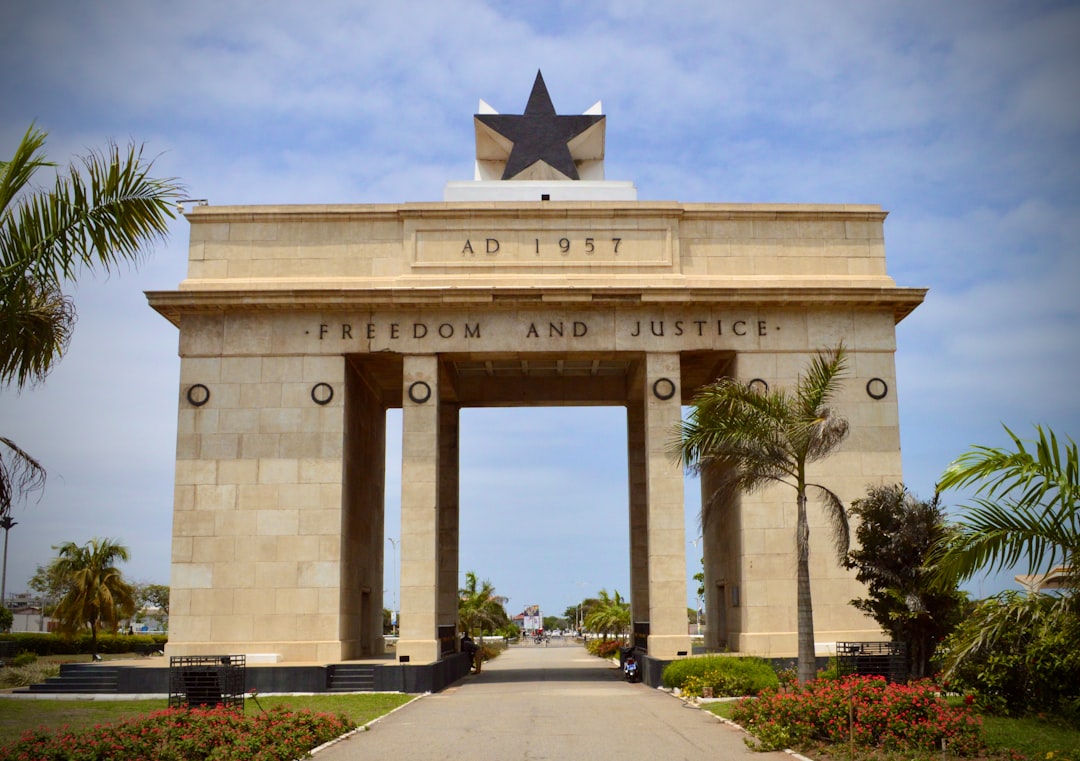
The Black Star Square — formally renamed Independence Square — is Accra's ceremonial center, the open plaza where state events and independence celebrations have been held since 1957. The Independence Arch at the northern end of the square was built that same year as a literal gateway: you pass under it to enter the square, and on the arch's face is inscribed "Freedom and Justice," the national motto Nkrumah chose.

Black Star Square, Accra — Ghana's independence arch with national flags

The square sits between the square and the Atlantic Ocean, with an uninterrupted view of the water to the south. On the 6th of March each year, it fills with tens of thousands of people for Independence Day celebrations. On any other day, it's largely empty and you can walk across the full parade ground, read the plaques, stand under the arch, and look out at the ocean that represents both the country's wound and its exit from colonial rule. It's free, it's outdoor, and it's one of the most symbolically loaded pieces of urban space in Africa.

Visit Details — Independence Arch

📍 Location

Independence Square, central Accra

🎟 Entry Fee

Free · outdoor public space

🕐 Opening Hours

Always accessible

🚗 From Accra

In central Accra · walkable from most downtown hotels

Best Time

Early morning or dusk — dramatic light on the arch

13 Christiansborg Castle (Osu Castle)

Christiansborg Castle (Osu Castle) on the coast of Accra, Ghana — former Danish slave fort and presidential seat
Christiansborg/Osu Castle, Accra — UNESCO World Heritage Site

Christiansborg is the one colonial-era castle that most visitors to Accra don't manage to get inside, and that's partly because access is more restricted than the Central Region forts. Built in 1661 by the Danish — and changing hands between the Danes, the Akwamu people, the British, and finally the Ghanaian state — it served as the seat of Ghana's government from independence until 2013, when the presidency moved to the new Jubilee House complex.

The castle is now used for official state functions and tours are available but need advance arrangement. For those who manage to visit, the combination of the building's colonial origins and its role as Ghana's own seat of power through 56 years of independence creates a particular kind of complexity. It's a building that was used to colonize and then repurposed by the colonized. It now houses Ghana's foreign affairs operations and occasionally hosts state visits. Tours can be arranged through official channels — check with your hotel or guide for current availability.

Visit Details — Christiansborg Castle

📍 Location

Osu, Accra — on the Atlantic coast

🎟 Entry Fee

Varies · by-appointment tours only

🕐 Opening Hours

Tours by appointment — call ahead or arrange via hotel

🚗 From Accra

In Osu, Accra — 20–30 min from central Accra

Best Time

Arrange at least 48 hours in advance

Ready to visit these sites?

Our Ghana travel experts plan personalized historical tours — combining the castles, Ashanti culture, and Northern Ghana in one unforgettable trip. The first call costs nothing.

Book a Free Planning Call

Northern Ghana

Most visitors to Ghana don't make it north. That's a significant oversight. The north has its own distinct culture, architecture, and history — rooted in the Sahelian trade routes that connected West Africa to North Africa for a thousand years before any European ship appeared on the coast. The journey from Accra takes 10–12 hours by road (or a short flight to Tamale), but the sites here have almost no equivalent anywhere else in West Africa.

Read our Northern Ghana travel guide for full logistics and itinerary suggestions before planning this leg of the trip.

14 Larabanga Mosque

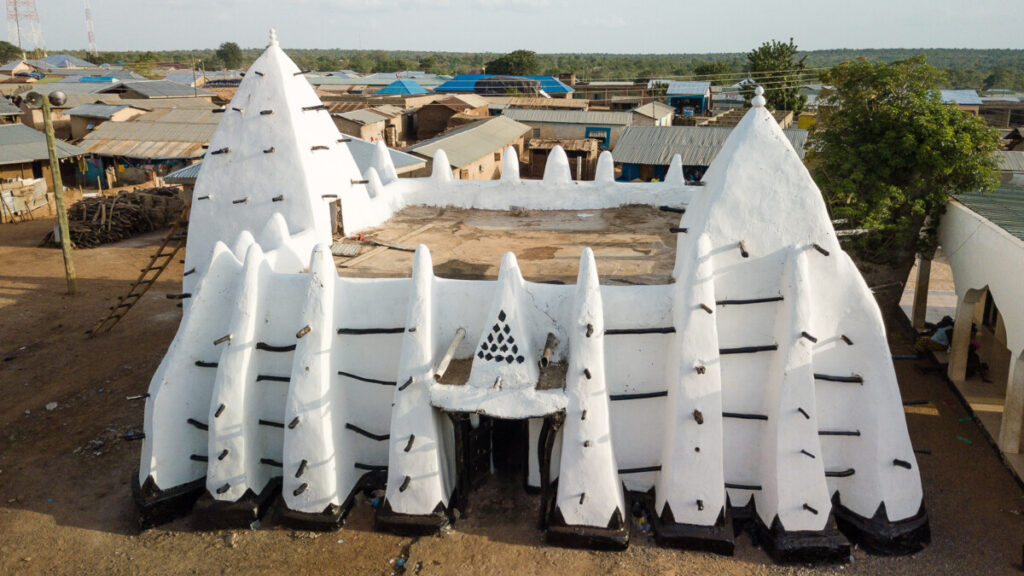
The Larabanga Mosque is almost certainly the oldest mosque in Ghana and one of the oldest in West Africa, with the founding date placed by local tradition and some archaeological analysis around 1421. That predates Columbus's first voyage by seven decades. It was built in the Sudanese-Sahelian architectural style — thick mud walls reinforced with protruding wooden beams called torons, which serve both as structural supports and as scaffolding for the annual replastering that keeps the building intact. The style exists elsewhere in the Sahel, most famously at the Great Mosque of Djenné in Mali.

Aerial view of Larabanga Mosque, Northern Ghana — 14th-century Sudanese-Sahelian mud-brick mosque, oldest in Ghana and West Africa

Larabanga is a small, quiet village on the road to Mole National Park, and the mosque sits in the middle of a community that still uses it for daily prayer. Non-Muslim visitors are welcome to walk around the exterior and, with the caretakers' permission, may be invited inside outside of prayer times. The building is relatively small — this is not a grand cathedral-scale structure — but the age, the setting, and the architectural tradition make it genuinely remarkable. If you're going to Mole (which you should), Larabanga is on the route and stopping costs nothing.

Also nearby: the Paga Crocodile Pond, another essential Northern Ghana stop (see Site 15).

Visit Details — Larabanga Mosque

📍 Location

Larabanga, Northern Region — near Mole NP

🎟 Entry Fee

Free · donation expected and appreciated

🕐 Opening Hours

Open daily outside prayer times

🚗 From Accra

~600 km · ~11 hours or fly to Tamale + 2hr drive

Best Time

Nov–March (dry season) — roads in the north improve significantly

15 Paga Crocodile Pond

Sacred crocodile at Paga Crocodile Pond, Upper East Region Ghana — friendly crocodiles considered ancestors of the Kasena people
Sacred crocodile at Paga Crocodile Pond, Upper East Region

Paga sits right on the Ghana-Burkina Faso border and is the site of one of the more genuinely unusual sacred traditions in West Africa. The crocodiles in the town's ponds — and there are many — are believed by the community to be reincarnated ancestors. They've been worshipped and protected here for over 400 years. They are not tame, exactly, but they are habituated to human presence in a way that makes the experience of sitting next to a 2-meter crocodile on the edge of the pond distinctly surreal.

Visitors are guided to the pond by community members who summon the crocodiles with small offerings of live guinea fowl. The crocodiles respond. You can sit beside them for photographs — there are protocols for how to do this safely, and the guides know them well. The tradition holds that if a crocodile dies, a child in the community dies on the same day, and vice versa. The community's relationship with the animals is genuinely theological, not performative for tourism. That comes through in how the guides speak about it.

For full details, read the Paga Crocodile Pond guide.

Visit Details — Paga Crocodile Pond

📍 Location

Paga, Upper East Region · Ghana-Burkina Faso border

🎟 Entry Fee

GHS 30 · guide fee additional

🕐 Opening Hours

Dawn to dusk daily — crocodiles most active morning

🚗 From Accra

~800 km · fly Tamale + drive north 3.5 hrs

Best Time

Nov–Feb — dry season, cooler temperatures

16 Nalerigu Fort

Nalerigu Fort is less visited than it deserves to be, partly because it sits in the North-East Region at some distance from the main northern tourist circuit. Built by the British colonial administration in the early 20th century as a garrison post for the Northern Territories Constabulary, it was the most significant British fortification in the north and the administrative center for the entire region during the early colonial period.

The fort is now a regional landmark in Nalerigu town, maintained in reasonable condition. It tells the story of how British control was extended into the north — a process that played out differently here than on the coast, relying more on political maneuvering with existing chieftaincies than outright military conquest. The fort itself is modest in scale, but for visitors making the full northern circuit, it adds a layer to the colonial story that the more famous slave castles don't tell. Local guides in Nalerigu can contextualize the building's history within the broader story of British expansion in the north.

Visit Details — Nalerigu Fort

📍 Location

Nalerigu, North-East Region

🎟 Entry Fee

Small fee / donation · locally managed

🕐 Opening Hours

Daylight hours · contact local guide ahead of visit

🚗 From Accra

~750 km · fly Tamale + drive northeast ~2 hrs

Best Time

Nov–March · combine with Larabanga and Paga

Volta Region

The Volta Region runs along Ghana's eastern border with Togo and holds a concentration of natural and cultural sites that are historically significant in ways that don't always get packaged neatly for tourists. The Ewe people of the Volta have their own pre-colonial history of migration, resistance, and sacred tradition that's distinct from both the Ashanti and the coastal Akan. Three sites here are worth building a dedicated visit around.

17 Tafi Atome Monkey Sanctuary

Sunset over Tafi Atome Monkey Sanctuary, Volta Region Ghana — community-led conservation site protecting sacred mona monkeys
Sunset at Tafi Atome Monkey Sanctuary, Volta Region

The mona monkeys at Tafi Atome have been protected by a shrine covenant since the 17th century. According to the tradition of the village, the monkeys arrived with the original settlers who founded Tafi Atome, and they are considered sacred — protected by the shrine and by the community's collective obligation not to harm them. The result, 300-plus years later, is a population of entirely wild but essentially unafraid monkeys who move through the village and the surrounding forest without concern for human presence.

The monkey sanctuary became a formally organized ecotourism site in the 1990s with support from NGOs working on community conservation models. The underlying sacred tradition, though, is real and predates the tourism infrastructure by centuries. Village guides explain both layers — the spiritual origin and the conservation history — and the experience of sitting in a forest while wild monkeys investigate your shoulders and hair is not something you'll forget. It's one of the stranger and more charming sites in all of Ghana.

Visit Details — Tafi Atome Monkey Sanctuary

📍 Location

Tafi Atome, Volta Region, near Hohoe

🎟 Entry Fee

GHS 40 · includes community guide

🕐 Opening Hours

6am – 6pm daily · morning best for monkey activity

🚗 From Accra

~180 km · ~3 hours via Volta Region

Best Time

Early morning, year-round

18 Wli Waterfalls

Wli Waterfalls in the Volta Region of Ghana — West Africa's tallest waterfall at 80 meters high
Wli Waterfalls, Volta Region — West Africa's tallest waterfall

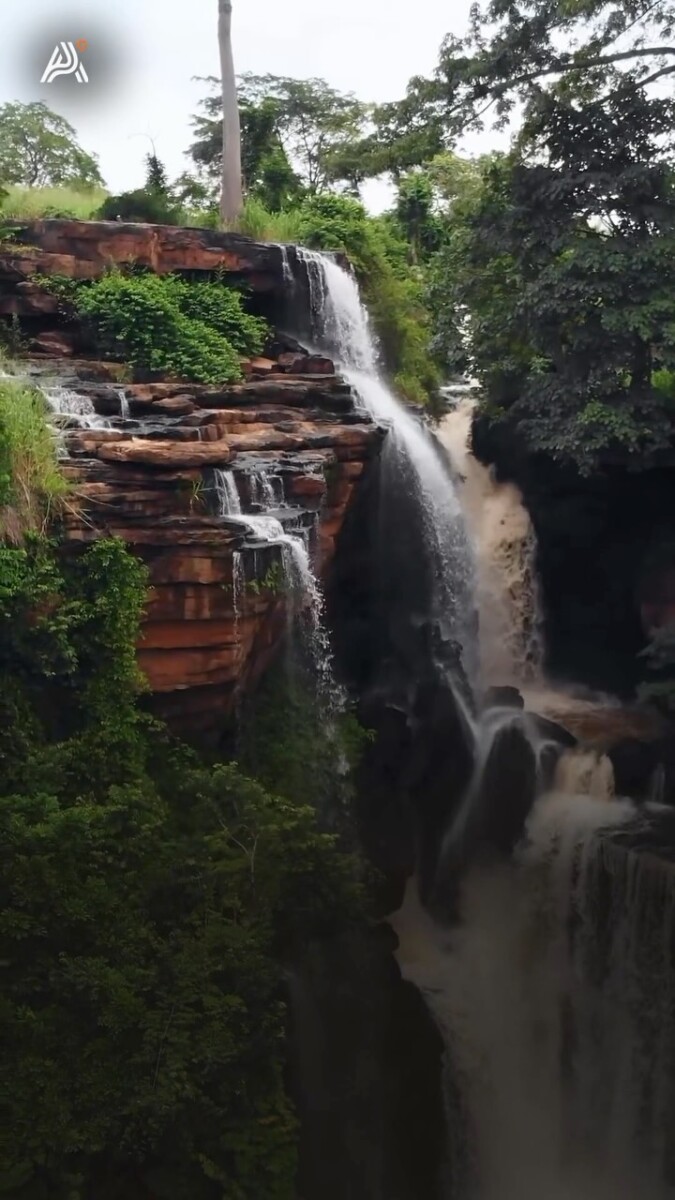
Wli (pronounced "Vlee") is Ghana's highest waterfall, dropping about 80 meters through a forested gorge near the town of Hohoe. The falls have been a site of traditional Ewe water ceremonies for generations — the community considers the gorge and its waterfall spiritually significant, separate from whatever the ecotourism industry has built around it in recent decades. During certain festivals, the falls become a site of ritual rather than recreation, and visitors should be aware of those times.

The practical experience of visiting Wli involves a 45-minute walk through farmland and rainforest to reach the lower falls, which is accessible to most fitness levels. The upper falls require a longer, more demanding hike but the views are considerably more dramatic. The gorge below the lower falls hosts one of the largest bat colonies in West Africa — hundreds of thousands of straw-colored fruit bats roost in the forest ceiling. At dusk, when they leave, the sky goes dark with them. It's one of those sights that takes a moment to register as real.

Visit Details — Wli Waterfalls

📍 Location

Wli, Volta Region, near Hohoe

🎟 Entry Fee

GHS 30 · guide recommended for upper falls

🕐 Opening Hours

6am – 5pm daily

🚗 From Accra

~190 km · ~3 hours via Volta

Best Time

Oct–Jan for peak water flow; arrive early to beat midday heat

19 Avatime Hills & Biakpa Traditional Villages

Road through the Avatime hills between Biakpa and Fume villages, Volta Region Ghana — heart of Avatime traditional area
Avatime hills, Volta Region — between Biakpa and Fume

The Avatime Hills, rising above the Volta Region just west of Hohoe, were home to a pre-colonial village confederation that predates Ghana's colonial history by several centuries. The Avatime people established their hilltop communities as a defensive strategy — positions in the hills gave them protection from the slave-raiding that devastated lower-lying communities throughout the region. The settlements they built have a distinctive traditional architecture, with compounds organized around family units and public gathering spaces that have maintained much of their pre-colonial character.

Biakpa, the most accessible of the Avatime villages, sits at around 600 meters elevation with views over the Volta plains below. The community has developed limited ecotourism facilities — a basic guesthouse, guided walks — but the real draw is the architecture of the older compounds and the chance to understand how Voltaian communities organized themselves before European contact reshaped the region's political geography. It's a slow, quiet stop that rewards travelers who aren't in a hurry.

Visit Details — Avatime Hills & Biakpa

📍 Location

Biakpa / Avatime Hills, Volta Region

🎟 Entry Fee

Free · guide tip appreciated (GHS 20–40)

🕐 Opening Hours

Village accessible during daylight hours

🚗 From Accra

~160 km · ~2.5 hours; combine with Hohoe

Best Time

Nov–March · cooler temperatures, clear views

Site 20: Pikworo Slave Camp, Paga

Pikworo tends to get less attention than the coastal castles, partly because it requires the long drive north. That imbalance is worth correcting. The Pikworo Slave Camp is an open-air site on the outskirts of Paga — a rocky outcropping where captives bound for the coast were held in a kind of outdoor staging ground, sometimes for weeks, before being marched south toward the forts.

20 Pikworo Slave Camp

Punishment stone with carved bowl at Pikworo Slave Camp near Paga, Upper East Ghana — site where enslaved Africans were held before transport to coastal castles
The punishment stone at Pikworo Slave Camp, near Paga

The site is not a building. It's a collection of rocks, shallow basins carved into the stone that served as communal food bowls, a grinding stone used by captives who were forced to provide their own labor while imprisoned, and a single tree used for punishment. The basins are still there. The grinding stone is still there. The tree is still there. There's no roof, no interpretive center, no gift shop. The haunting quality of Pikworo comes from its absolute openness — there's nothing between you and the history except the rock and what you know.

The community of Paga manages the site with local guides who explain the history — including the role that the trans-Saharan slave trade (which predated and ran alongside the transatlantic trade) played in the north. Captives came from throughout the Sahel region, from modern-day Niger, Burkina Faso, Nigeria. Pikworo was a node in a network, not an isolated tragedy. Understanding that scope is what the guides here help with. If you've come all the way north for Paga's crocodile pond, add two hours and visit Pikworo. It will stay with you.

Visit Details — Pikworo Slave Camp

📍 Location

Paga, Upper East Region

🎟 Entry Fee

GHS 20 · guide included

🕐 Opening Hours

Dawn to dusk · no formal ticket office

🚗 From Accra

~800 km · fly Tamale + drive north 3.5 hrs

Best Time

Nov–March; combine with Paga Crocodile Pond same day

Practical Tips for Visiting Historical Sites in Ghana

Visiting 20 historical sites across a country the size of Ghana takes planning. Here's what we've learned from guiding hundreds of visitors through these same places.

Best Time to Visit

  • Cape Coast and Central Region: Year-round, but October through April is drier and more comfortable. The harmattan (December–February) brings a dusty haze from the Sahara that softens the light and keeps temperatures reasonable.
  • 🌧 Northern Ghana: November through March only. The north's wet season runs April–October and can make unpaved roads to Larabanga, Paga, and the surrounding area genuinely difficult to navigate. The dry season is also dramatically cooler.
  • 🌿 Volta Region: October through January. The Wli waterfalls are most impressive immediately after the wet season, and the harmattan keeps the hills reasonably cool. The bat colony at Wli is visible year-round but most dramatic in October–November.

What to Wear

  • 👗 At mosques and shrines: Cover shoulders and knees as a baseline minimum. At Larabanga Mosque, women should bring a head covering. At shrines like Besease and Tafi Atome, the specific rules vary — your guide will brief you. Removing shoes is often expected.
  • 🏰 At the slave castles: Casual clothing is fine, but bring a light layer — the dungeon interiors are cool and the emotional temperature can make even warm days feel cold. Practical shoes matter; the floors are uneven stone.

Photography Etiquette

  • 📷 Ask before photographing people — this applies everywhere but matters most in smaller communities like Bonwire, Tafi Atome, and Biakpa, where tourism is part of the economy but personal dignity matters more than the shot.
  • 🚫 Photography restrictions at sacred sites: Some areas within the slave castles request no photography — the dungeon interiors specifically. Larabanga Mosque photography is restricted to the exterior. The Okomfo Anokye sword may not be photographed at close range. Your guide will tell you.

Guides vs. Self-Guided

  • 🧭 Cape Coast, Elmina, and Manhyia Palace: Hire a guide. The official guides at Cape Coast and Elmina are among the best in the country — extensively trained, historically knowledgeable, and capable of calibrating the visit to the group. Self-guided visits at the slave castles consistently produce less insight and more disorientation.
  • 🤝 Pikworo, Assin Manso, Fort Amsterdam: Community guides are the only real option and are part of the site experience. They know details that no book has recorded and the fee supports local preservation. Never skip or underpay a local guide at these sites.

Combining Sites into Routes

3-Day Central Region Circuit

Day 1: Accra → Assin Manso → Cape Coast Castle. Day 2: Elmina Castle + Fort St. Jago + Fort Amsterdam. Day 3: Kakum National Park → Accra. Covers Sites 1–6.

5-Day Ashanti + Central

Days 1–3 as above. Day 4: Drive Kumasi, Manhyia Palace + Okomfo Anokye. Day 5: Bonwire + Besease Shrine → Accra. Covers Sites 1–10.

3-Day Volta Region Add-On

From Accra: Day 1 Tafi Atome + Wli Waterfalls (base Hohoe). Day 2 Biakpa/Avatime Hills. Day 3 return Accra. Covers Sites 17–19.

10-Day Full Historical Tour

All 20 sites across Central, Ashanti, Accra, Volta, and Northern Ghana. Fly Accra–Tamale for the north. Includes Larabanga, Paga Crocodile Pond, Pikworo, and Nalerigu Fort. This is the tour we build for serious heritage travelers. Ask us to plan it.

Let's Plan Your Ghana Heritage Journey

Our travel experts know these sites personally. We'll build you a custom historical tour that goes deeper than any package — right logistics, right guides, right pacing.

EVENTS IN GHANA

What's On in Ghana This Week

Festivals, concerts, cultural events, and experiences — updated every week.

Browse Events →
See it for real

Visit it — with a guide who knows the way

Don’t just read about it. Akwaaba’s curated, all-inclusive trips bring these places to life with verified local guides, transport, stays and a $50 airport chauffeur pickup.

Curated Ghana ToursVerified guides, real experiencesFrom $1,475Ghana Tours from the USAFor the diaspora coming homeFrom $1,475Free AI Trip PlannerBuild your custom itineraryFree
Explore tour packages →
✓ Prices in USD  ·  ✓ $50 airport chauffeur pickup  ·  ✓ Verified local guides  ·  ✓ A portion of every trip gives back to local communities

REAL TRIPS · REAL PEOPLE

See What Ghana Actually Looks Like

From our travelers’ feeds — unfiltered Ghana experiences

Detty December in Ghana Traditional Ghanaian dance Accra from above Cape Coast Castle Kakum canopy walk Accra nightlife
Follow @akwaaba.app on Instagram →
Need help planning your Ghana trip? Chat with us! We typically reply in minutes