Plan your Ghana trip
Don’t just read about it. Go.
Akwaaba plans and books Ghana trips for diaspora travelers. Free AI itinerary in 60 seconds — or WhatsApp our team to get a custom quote today.
Northern Ghana is one of those places that catches you off guard. You’ll drive through Kumasi, past the forest belt, and then somewhere around Kintampo the trees start thinning and the sky opens up. Red laterite soil, flat savanna, baobab trees with their strange upside-down silhouettes, and a heat that sits on you in a way the south never quite does. By the time you reach Tamale, you’re in a different country in all but name.
This is the Ghana that most visitors skip. The package tours don’t come up here. The cruise ships certainly don’t. On a good week at Mole National Park, you might encounter a handful of other foreign tourists. That’s the whole park, Ghana’s largest, to yourself and a few rangers. If you’ve ever been to a major East African safari and found it beautiful but crowded, Northern Ghana will feel like a revelation.
It’s also not the easiest region to travel. The distances are long, the heat is real, and some of the logistics require planning. This guide covers everything: how to get there, what to do, where to stay, and what to actually expect on the ground.
Why Visit Northern Ghana
The north is culturally distinct from southern Ghana in ways that matter to a traveler. The dominant religions are Islam and indigenous earth religions rather than Christianity. You’ll see mosques instead of churches, hear the call to prayer at dawn, and notice that Ramadan changes the rhythm of daily life in towns like Tamale and Bolgatanga. The traditional dress is different too — the hand-woven smock, a loose pullover shirt with geometric patterns, worn by men across the region.
The ethnic landscape is its own education. The Dagomba are the dominant group around Tamale, with their own chieftaincy structures, drum history, and Eid celebrations that draw tens of thousands. Further north you have the Frafra and Builsa peoples, known for their elaborate compound architecture — round mud-brick rooms arranged in family clusters, sometimes painted with geometric designs.
And then there’s the wildlife. Mole National Park holds the largest elephant population in Ghana, along with warthogs, baboons, kob antelope, and over 300 bird species. It’s not Botswana — the infrastructure is basic, the park roads are rough — but a dawn walk with an armed ranger, watching elephants come to the waterhole twenty metres away, is genuinely one of the best wildlife experiences in West Africa.
EVERYTHING HANDLED FOR YOU
Akwaaba Covers the Full Trip — Not Just the Tour
Getting to Northern Ghana
There are three realistic options, and the right one depends on your budget and how much time you have.
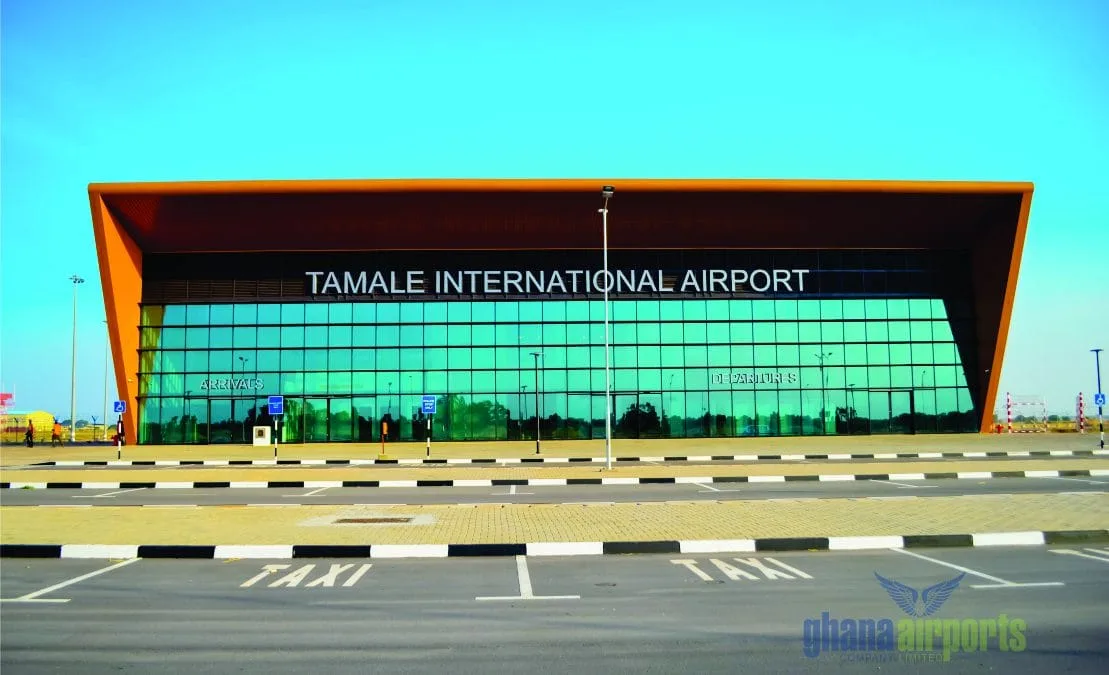
Flying is the best option for most visitors. Accra’s Kotoka International Airport has multiple daily flights to Tamale International Airport, operated by Ghana Airways, Africa World Airlines, and Passion Air. The flight is about one hour and tickets run roughly $60-120 one way depending on how far in advance you book. If you’re short on time, fly. The drive from Accra takes 10-11 hours.
Driving takes 10-11 hours via the N10 highway through Kumasi. The road is paved the whole way. If you have a 4WD and want flexibility to stop in smaller towns along the way, driving works. Leave Accra by 5am to arrive before dark.
Bus is the affordable option. VIP Bus runs Accra to Tamale overnight, around 12 hours. The seats recline, there’s usually air conditioning, and it gets you there.
Once you’re in Tamale, the internal logistics are straightforward. Bolgatanga is 170km north, about 2.5 hours by shared taxi. Mole National Park is roughly 3 hours west of Tamale — you’ll want a private taxi or arranged vehicle from your hotel. Salaga, east of Tamale, is about 2 hours by road.
Tamale: Your Northern Base
Tamale is Ghana’s third-largest city and the undisputed capital of the north. It’s a working city — not particularly pretty, not set up for tourism — and that’s exactly what makes it worth a day or two. The Central Market is the place to start: sections for dried fish, shea butter, the smock sellers with their rows of hand-woven fabric, guinea fowl everywhere (the north’s signature protein, much preferred over chicken up here). Dawadawa, the fermented locust bean spice used across northern cooking, has a smell that takes getting used to but a taste you’ll want in everything once you do.
Tamale’s food scene is street-level and good. Hausa koko — a slightly spiced millet porridge served with koose (fried bean cakes) — is the standard breakfast. Fufu with groundnut soup is the lunchtime staple. In the evenings, guinea fowl kebabs grilled over charcoal appear at street stalls around the main roundabouts.
For accommodation, Tamale has options at the mid-range level without much in the way of boutique charm. Radach Royal Hotel, Picorna Hotel, and Mariam Hotel are all clean, reliable, and reasonably priced. Expect GHS 200-400 per night for a decent room with air conditioning.
Mole National Park
Ghana’s largest protected area at 4,840 square kilometres, Mole is the reason most people make the journey north. The park holds elephants, warthogs, buffalo, baboons, various antelope species, and a bird list that ornithologists take seriously — over 300 species recorded, including rare raptors and endemic West African species.
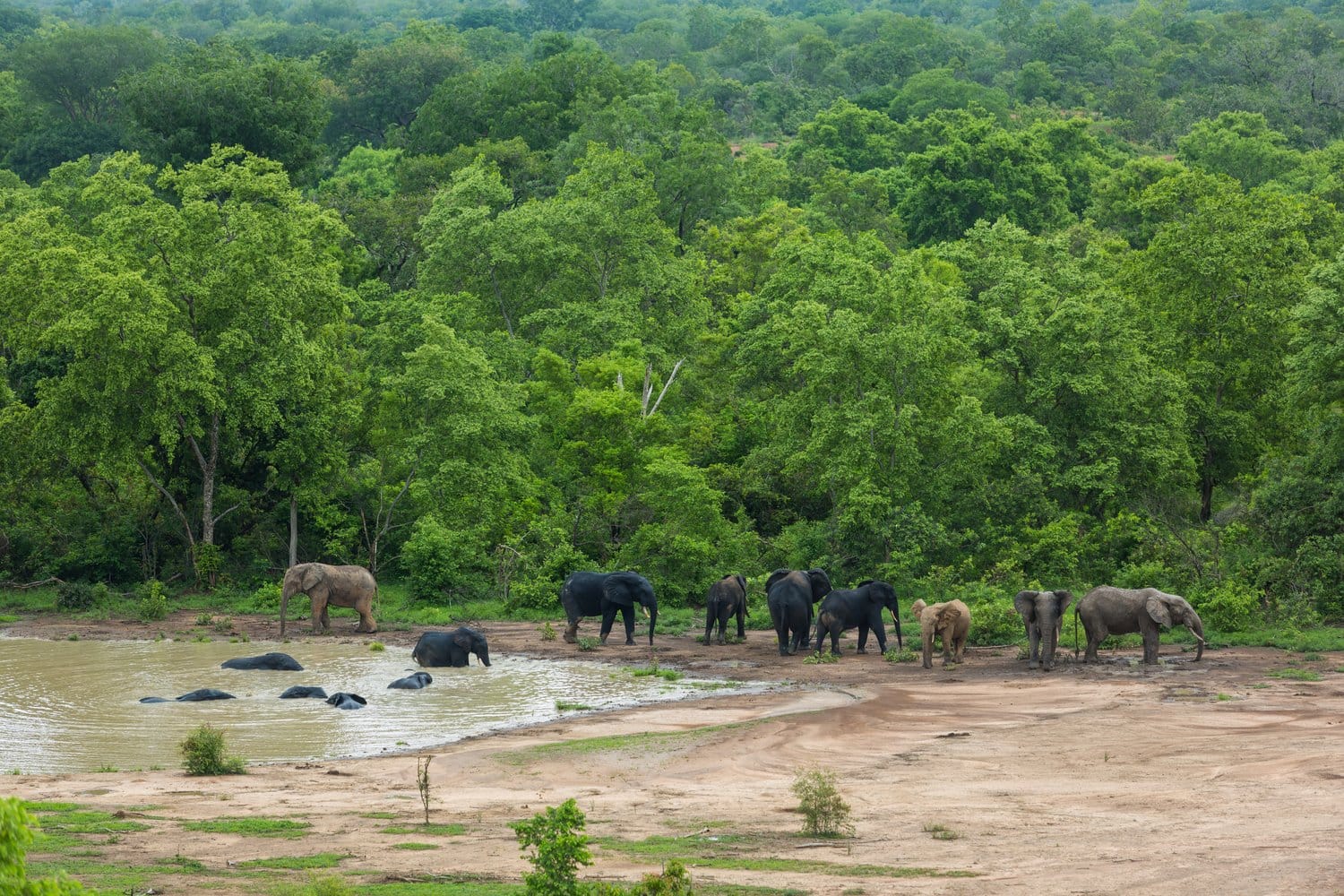
The signature activity is the dawn walking safari with an armed ranger. You set off at first light, before the heat arrives, and walk through the bush toward the watering holes below the Mole Motel. Elephant encounters on foot at close range — twenty, sometimes ten metres — are common. There’s nothing between you and them except your ranger. It’s one of those experiences that stays with you longer than you expect.
The Mole Motel sits on a ridge overlooking a watering hole, with a swimming pool that has a direct sightline to where elephants drink. The motel itself is the definition of functional — don’t expect luxury — but the setting makes it worth every night you stay there.
Read the complete Mole National Park guide for full details on game walks, accommodation booking, getting there from Tamale, and what to expect in different seasons.
Larabanga: The Ancient Mosque
Three kilometres from Mole’s main gate is Larabanga, a small village with a mosque that deserves to be on every Ghana itinerary. The Larabanga Mosque is traditionally dated to the 14th century, which would make it the oldest mosque in Ghana and one of the oldest in sub-Saharan Africa. The mosque is Sudano-Sahelian architecture — the same tradition that produced the great mosques of Mali — rendered in mud brick with wooden beams protruding from the walls. It looks ancient because it is.
The mosque is still an active place of worship. Non-Muslim visitors are generally welcome outside of prayer times with a guide from the village. Donations to the village development fund are standard and expected — this is one of the main income sources for Larabanga. The other thing Larabanga is known for is the Mystic Stone, a large flat rock that local legend holds returns to its original position whenever it’s moved. The story is more interesting than the stone itself, but both are worth the visit.
Bolgatanga and the Upper East
Bolgatanga — Bolga to anyone who’s been there — is the capital of the Upper East Region, 170km north of Tamale and getting close to the Burkina Faso border. The Bolgatanga baskets are the main thing: hand-woven baskets made from elephant grass and leather strips, often in bright geometric patterns. They’ve been exported to international markets for decades. Buying directly at Bolgatanga Market is significantly cheaper than buying them in Accra or abroad. The market is also one of the better craft markets in Ghana for traditional smock fabric, pottery, and leatherwork.
The architecture around Bolgatanga is worth noting — red laterite brick compounds that blend into the earth around them, flat roofs used as living space, a built form adapted over centuries to the heat and materials of the savanna. Sandgrouge Hotel in Bolga is solid, clean, and reasonably priced.
Paga Crocodile Pond
Paga is 25km north of Bolgatanga, nearly at the Burkina Faso border. The sacred crocodile ponds of Paga are home to crocodiles that local communities believe carry the spirits of deceased ancestors. As a result, no one harms them and they’ve grown up around humans their entire lives. They’re completely calm with people.
You can touch them. You can sit on them. The keeper brings a chicken, the crocodiles move toward it, and the whole interaction is unhurried and surprisingly relaxed — for the crocodiles at least. This is not staged. Entry requires a guide and there’s a fee — budget for both. Paga is an easy half-day from Bolgatanga and a natural combination with a visit to the Bolgatanga market. Don’t skip it.
Tongo Hills
Tongo Hills is one of those places that barely appears in travel writing about Ghana. The rocky hills east of Bolgatanga are sacred to the Tongo people, who maintain a system of earth shrines tended by Tendaanas — traditional priests whose role connects living communities to the land and ancestors going back centuries. A visit involves a guide from the community, some scrambling over rocks, and a genuine encounter with a religious and cultural tradition that has nothing to do with mainstream tourism. Very few tourists come here, and the experience reflects that — it’s quiet, a little unpredictable, and real.
Related: Noda Hotel in Kumasi, Ghana
Related: Anita Hotel in Kumasi, Ghana
Salaga Slave Market
Salaga is two hours east of Tamale on a road that doesn’t get much traffic. In the 19th century, it was the largest slave market in West Africa. Enslaved people passed through here from across the interior, traded through a network that stretched from the Sahel to the coast. What remains today is sobering: former holding pits where enslaved people were kept, a small museum with records and context, and the remnants of the market grounds.
For visitors with West African heritage, particularly from the diaspora, Salaga can be a genuinely emotional stop. It’s not a highlight in the conventional travel sense, but it earns its place in a comprehensive northern itinerary.
Suggested 5-Day Northern Ghana Itinerary
Day 1: Fly from Accra to Tamale (morning flight gets you there by midday). Adjust to the heat. Afternoon at Tamale Central Market. Guinea fowl kebabs for dinner at the roundabout stalls.
Day 2: Early departure to Mole National Park (3 hours west of Tamale). Arrive in time for the afternoon game walk.
Day 3: 6am dawn game walk. This is the one. Elephants at the waterhole, minimal heat, the park before it wakes up. After the walk, drive three kilometres to Larabanga, visit the mosque. Head back toward Tamale for the night.
Day 4: Drive north from Tamale to Bolgatanga (2.5 hours). Stop at Paga Crocodile Pond on arrival. Back to Bolga for the afternoon market. Overnight at Sandgrouge.
Day 5: Morning at Tongo Hills. Drive back to Tamale for an afternoon flight to Accra, or continue south by road if you have more time.
Want help planning your Northern Ghana trip?
Akwaaba designs custom northern itineraries — Mole game walks, Paga crocodiles, Bolga markets, logistics sorted. Free 30-minute planning call.
Practical Tips for Northern Ghana
Heat: March to May is brutal — temperatures regularly hit 38-40°C in Tamale and Bolga. November to February is the window most visitors aim for: cooler, drier, manageable. December and January are excellent.
Malaria risk is higher in the north than in Accra. Take prophylaxis seriously, use repellent especially at dawn and dusk, and sleep under a net if your accommodation provides one.
Cash: Tamale and Bolgatanga both have ATMs and they generally work, but carry sufficient cedi from Accra. Card payments are essentially nonexistent outside of a few hotels in Tamale.
Dress: Northern Ghana is majority Muslim and cultural expectations around dress are more conservative than in Accra or on the coast. Long trousers or loose-fitting clothing when visiting mosques or traditional compounds.
Photography: Ask before pointing a camera at anyone. Most people are happy to be photographed if you’ve had even a brief conversation first.
Language: English is understood in all the main towns. A few basic greetings in Dagbanli go a long way. The effort is always noticed.
Frequently Asked Questions
Is Northern Ghana safe to visit?
Yes, for the areas covered in this guide. Tamale, Mole, Bolgatanga, and Paga are all safe for travelers. The north has had periodic inter-community conflicts in past decades, mostly around chieftaincy disputes and land, but these don’t typically affect tourists and the main travel zones have been stable for years. Check current advisories from your government’s travel advisory site before traveling.
What is the best time to visit Northern Ghana?
November through February is the ideal window. Temperatures are cooler (25-32°C rather than 38-42°C), the harmattan keeps conditions dry, and the roads are in better shape after the rains. December and January are peak months for a reason — the wildlife at Mole is active, the heat is manageable, and the north has a clarity in that dry season light that the rainy months don’t offer.
How do I get from Accra to Mole National Park?
The most practical route: fly Accra to Tamale (1 hour, $60-120), then arrange a private vehicle from Tamale to Mole (approximately 3 hours, best pre-arranged through your accommodation). You can also take a bus from Tamale toward Wa and get dropped at the Mole junction, but the fly-then-drive approach is the smoothest option for most visitors.
What is Northern Ghana known for?
Mole National Park and its elephants. The ancient Larabanga Mosque. Bolgatanga’s hand-woven baskets. Paga’s sacred crocodiles. The Dagomba chieftaincy culture and its elaborate festivals. The region is also known for guinea fowl, shea butter production, and traditional smock fabric — things that don’t make mainstream lists but define daily life across the north.
Want help planning your Northern Ghana trip?
Akwaaba designs custom northern itineraries — Mole game walks, Paga crocodiles, Bolga markets, logistics sorted. Free 30-minute planning call.
Plan Your Ghana Trip
- Ghana Vacation Packages
- Detty December 2026 Packages
- Heritage Trail Tour
- Food Tasting Tour
- Things to Do in Ghana
- Best Time to Visit Ghana
- First-Time Visitors Guide

Akosua Adoma is Akwaaba’s Marketing Manager and Ghana travel specialist. She has spent years exploring Ghana’s most iconic destinations — from the Cape Coast dungeons to the canopy walkways of Kakum — and helping diaspora travelers reconnect with the continent. She oversees Akwaaba’s content strategy, community partnerships, and brand storytelling.
Lock in your Ghana trip for just $100 down
Flights, vetted stays, local guides and SanlamAllianz insurance — all handled. Reserve your spot with $100, pay the balance later.
REAL TRIPS · REAL PEOPLE
See What Ghana Actually Looks Like
From our travelers’ feeds — unfiltered Ghana experiences
Plan your homecoming
Ready to experience Ghana for real?
Akwaaba handles the whole trip — curated packages, day experiences, and the hottest events. Just $100 reserves your spot, and you can split the balance into easy payments.
Use code AKWAABA for 5% off your first booking · Rated 4.7★ by 140+ travelers