Most visitors to Ghana’s surf coast stop at Busua and turn around. Keep walking another hour down the shoreline, past the last guesthouse and around a headland, and the beach gives way to a river mouth, a scatter of fishing canoes, and a Dutch fort on a hill that most tour itineraries never mention. This is Butre — a working fishing village in the Ahanta West District of Ghana’s Western Region, and the site of one of the oldest continuously-referenced treaties on the Gold Coast.
Butre doesn’t have Busua’s surf schools or beach bars. What it has is a 17th-century fort, a river you cross by dugout canoe to get anywhere, and a coastline that’s changed very little since the Dutch first arrived looking for gold.
Where Butre Sits on the Ahanta Coast
Butre sits on a sheltered bay where the Butre River meets the Atlantic, in the Ahanta West Municipal District — the same stretch of Western Region coastline that produced Busua’s surf scene and Dixcove’s Fort Metal Cross. The village is built on both banks of the river estuary, which means a dugout canoe crossing is part of daily life here, not a tourist gimmick: fishermen, schoolkids, and traders use the same canoes to get from one side of Butre to the other.
The most common way in is on foot: a roughly 6-kilometer (3.7-mile) coastal trail connects Busua to Butre, taking most walkers two to three hours depending on how often they stop. The path hugs the shoreline, can turn muddy and slippery after rain, and sees a fraction of the foot traffic of Ghana’s more famous hikes — which is exactly the appeal for anyone who’s already done Busua’s beach and wants the quieter version of the same coast. Butre is also reachable by road via Agona Nkwanta, or as a stop between Busua/Dixcove and Axim if you’re driving the coast road.
EVERYTHING HANDLED FOR YOU
Akwaaba Covers the Full Trip — Not Just the Tour
Fort Batenstein: Ghana’s Least-Visited Castle
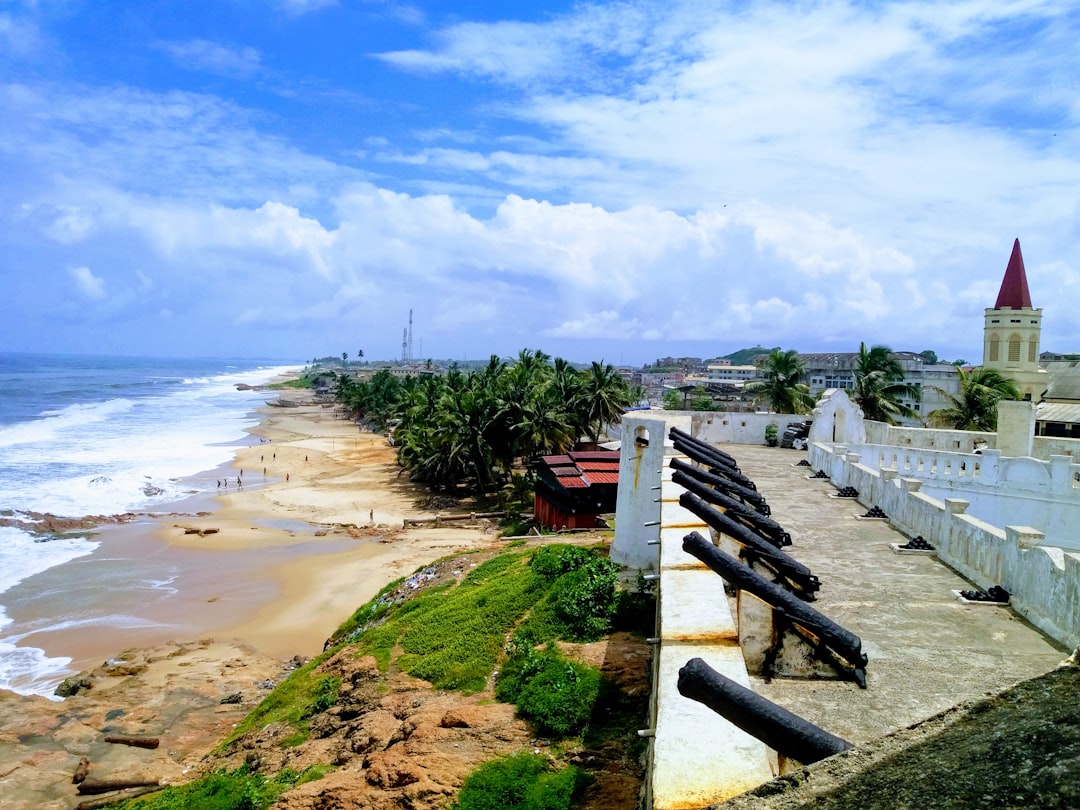
On the hill above the village stands Fort Batenstein, built by the Dutch West India Company in 1656 after they pushed a rival Swedish trading post out of Butre. It’s a modest two-storey structure by the standards of Elmina or Cape Coast Castle — ten rooms in total, including a dining area, a courtyard, a bakery, a kitchen, and a well — but its history is a full loop of Gold Coast colonial politics: the English took it in 1665, the Dutch abandoned it between 1818 and 1827, rebuilt it in 1828, and held it until 1872, when the Dutch withdrew from the Gold Coast entirely and handed it to the British.
Like the other 30-plus forts and castles along Ghana’s coast, Batenstein was inscribed as part of the UNESCO World Heritage Site “Forts and Castles, Volta, Greater Accra, Central and Western Regions” in 1979. Unlike Elmina or Cape Coast, it sees a trickle of visitors rather than tour buses — most days it’s just the caretaker and whoever the village’s Town Tourism Development Committee has arranged to guide you up the hill. From the top, the view runs straight down the river mouth to the open Atlantic.
The Treaty That Named the Village
Butre’s other claim to history predates the fort by a few weeks. On 27 August 1656, Dutch officials and Ahanta leaders signed the Treaty of Butre at this exact spot — an agreement that gave the Dutch West India Company jurisdiction over the town and a protectorate over the surrounding Ahanta territory, in exchange for the Dutch largely staying out of local Ahanta governance everywhere else. The treaty held, more or less unbroken, until the Dutch left the Gold Coast in 1872 — a run of 216 years, which makes it one of the longest-standing agreements of the entire colonial period on this coast. It’s still cited today in Ghanaian legal and historical discussions of Ahanta sovereignty, decades after the ink dried.
Crossing the River: Canoes, Mangroves, and Daily Life
The Butre River is the reason the village exists where it does, and it’s still the easiest way to see the place properly. Local boatmen paddle hand-carved dugout canoes upstream through mangrove channels, where guides point out mudskippers flipping across the mud banks and kingfishers working the treeline; locals will also tell you crocodiles turn up further upstream, though don’t plan your visit around seeing one. It’s a slower, quieter version of the canoe ride tourists associate with Nzulezu, minus the crowds — and it costs a small fee paid locally rather than booked in advance.
Water Butre Shares With Busua — But Isn’t Quite Busua
Busua, a short walk or drive up the coast, is Ghana’s actual surf hub: consistent Atlantic swell, board rentals, and Ahanta Waves Surf School & Camp, founded by Busua native Peter Ansah, running lessons on 3–4 foot waves that peak roughly November through April. Butre sits on the calmer, river-mouth side of the same coastline. It’s a place to swim, paddle a canoe, and watch fishermen haul nets rather than a surf break in its own right — which is part of why it stays quiet even as Busua fills up with surfers in peak season.
Where to Stay Near Butre
Accommodation in Butre itself is small and deliberately low-key: Hideout Lodge, an eco-lodge roughly 20 minutes from Busua that’s reachable only by boat or on foot, and the neighboring Afro Beach Eco Resort and its sister property Zion Lodge, both simple, solar-and-generator eco stays built for travelers who want the river, the fort, and not much else. Busua, a few kilometers back up the coast, has the wider range of options — including Busua Beach Resort and Ahanta Eco Lodge — for anyone who wants surf lessons and a beach bar in the same trip.
Pairing Butre With the Rest of the Ahanta Coast
Butre works best as a half-day or overnight add-on to a longer Western Region stop, not a standalone destination. Most travelers combine it with:
- Dixcove and Fort Metal Cross — a British-built fort a short drive further west, overlooking another fishing harbor
- Busua Beach — for surf lessons, restaurants, and a wider choice of places to stay
- Cape Three Points — the southernmost point in Ghana, with a 19th-century lighthouse, a short drive past Dixcove
- Axim and Nzulezu — further west, for the stilt village and Fort Apollonia, if you’re doing a longer Western Region loop
Practical Tips for Visiting Butre
- Bring cash. Canoe fees and the Fort Batenstein guide fee are paid locally, in cash, to the Town Tourism Development Committee — there’s no online booking.
- Wear shoes you don’t mind getting wet or muddy, whether you’re hiking in from Busua or stepping in and out of a canoe.
- This is a working fishing village, not a photo set. Ask before photographing people, boats, or the canoe crossing.
- Go November through April for the driest trail conditions and the calmest water for the river trip.
- Budget half a day for the fort, the river, and the village — most people are back on the road (or the trail to Busua) by mid-afternoon.
Frequently Asked Questions
Is Butre the same as Busua?
No. Busua is the surf town with the beach bars and board rentals. Butre is a smaller, quieter fishing village about 6 km down the coast, home to Fort Batenstein and the Butre River mouth — most visitors see both on the same trip.
Can I visit Fort Batenstein without a guide?
You can walk up, but a local guide arranged through Butre’s Town Tourism Development Committee is the normal way in, and the small fee supports the village’s own tourism upkeep rather than a national agency.
Is there an Akwaaba package for Butre or the Western Region?
Not yet — Akwaaba’s current package catalog doesn’t include a dedicated Western Region or Butre-specific tour. You can browse all of Akwaaba’s current Ghana tour packages, or use the trip planner below to build a custom Western Region stop into an existing itinerary.
How do I get from Busua to Butre?
On foot, it’s a 6 km / 3.7-mile coastal trail, roughly 2–3 hours each way. By road, Butre is reachable via Agona Nkwanta, and it sits naturally along the coast road route toward Dixcove and Axim.
Planning a Ghana beach getaway?
Akwaaba doesn’t run a dedicated Western Region package yet, but we’ll help you build the Busua–Butre–Dixcove stretch into a custom Ghana trip — free planning call, no obligation.
Book a Free Planning Call →Plan Your Western Region Trip with Akwaaba
Butre isn’t going to out-shout Cape Coast Castle or out-surf Busua, and that’s the point. It’s a fort most tourists skip, a treaty most people have never heard of, and a river crossing that’s still just how the village gets around. If the Ahanta coast — Busua, Butre, Dixcove, Cape Three Points, Axim — is on your Ghana list, browse Akwaaba’s current Ghana tour packages for a starting itinerary, or talk to us directly about building the Western Region into your trip.
Ready to book your Ghana trip?
Tell us Butre, Busua, or the wider Western Region is on your list and we’ll help you plan around it — free 30-minute call.
Book a Free Planning Call →EVENTS IN GHANA
What's On in Ghana This Week
Festivals, concerts, cultural events, and experiences — updated every week.
Browse Events →
Lock in your Ghana trip for just $100 down
Flights, vetted stays, local guides and SanlamAllianz insurance — all handled. Reserve your spot with $100, pay the balance later.
FROM @AKWAABA.APP
See What Ghana Actually Looks Like
Our six latest posts on Instagram
Plan your homecoming
Ready to experience Ghana for real?
Akwaaba handles the whole trip — curated packages, day experiences, and the hottest events. Just $100 reserves your spot, and you can split the balance into easy payments.
Use code AKWAABA for 5% off your first booking