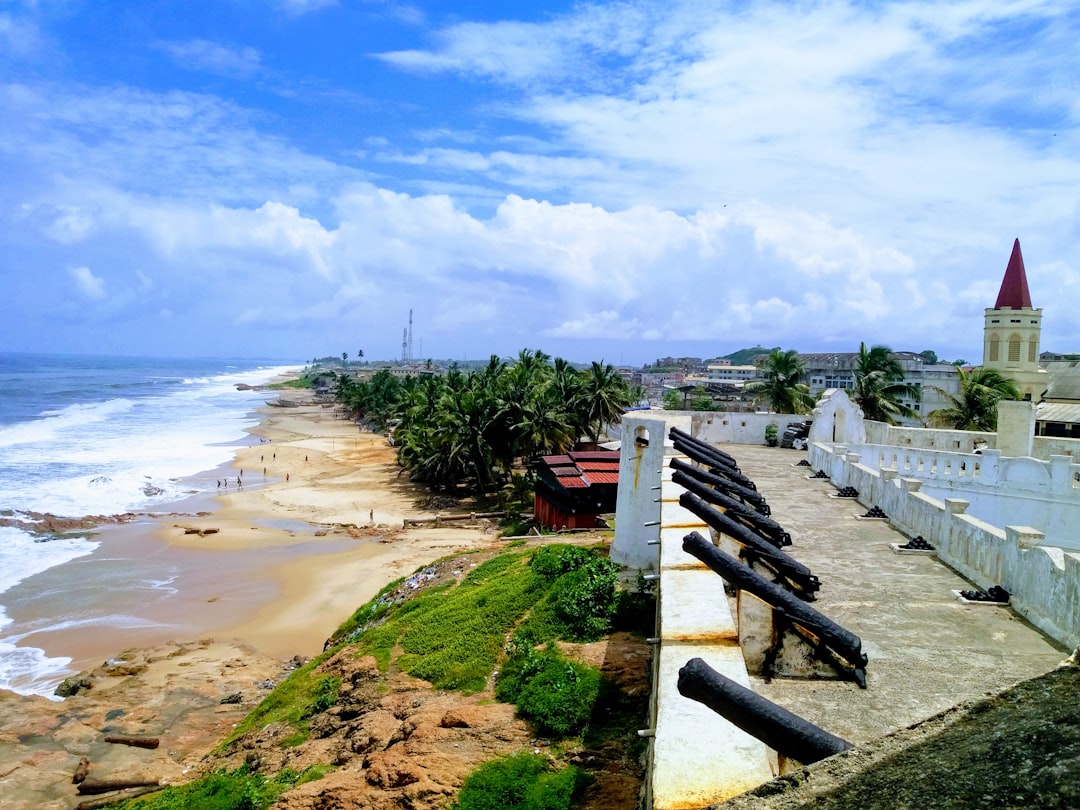
TL;DR:
- 🏰 Ghana’s coast holds roughly 30 surviving European-built forts and castles — part of the UNESCO World Heritage Site inscribed in 1979 — and two of them, Cape Coast Castle and Elmina Castle, were the largest departure points of the transatlantic slave trade on the Gold Coast.
- 🕯️ A real slave-castles tour connects three sites in one route: the dungeons of Cape Coast Castle, the Door of No Return at Elmina Castle — Ghana’s oldest European building, dated to 1482 — and the “last bath” site at Assin Manso, where two diasporans were symbolically reburied in 1998.
- 🇬🇭 Ghana markets this route as a homecoming, not sightseeing — the same framing behind 2019’s national “Year of Return” campaign.
- ✈️ Akwaaba books this exact route as a real, guided, one-day or multi-day tour — see prices and dates.
What “Ghana’s Slave Castles” Actually Means
“Slave castle” is the term used for the fortified trading posts that European powers — first Portugal, then the Dutch, Swedish, Danish, and British — built along roughly 300 miles of Ghana’s Atlantic coast between the 15th and 18th centuries. They started as gold and ivory trading posts. As the Atlantic slave trade grew, their storerooms were converted into holding dungeons, and the same walls that once secured trade goods began securing human beings before they were forced through a doorway onto ships bound for the Americas and the Caribbean.
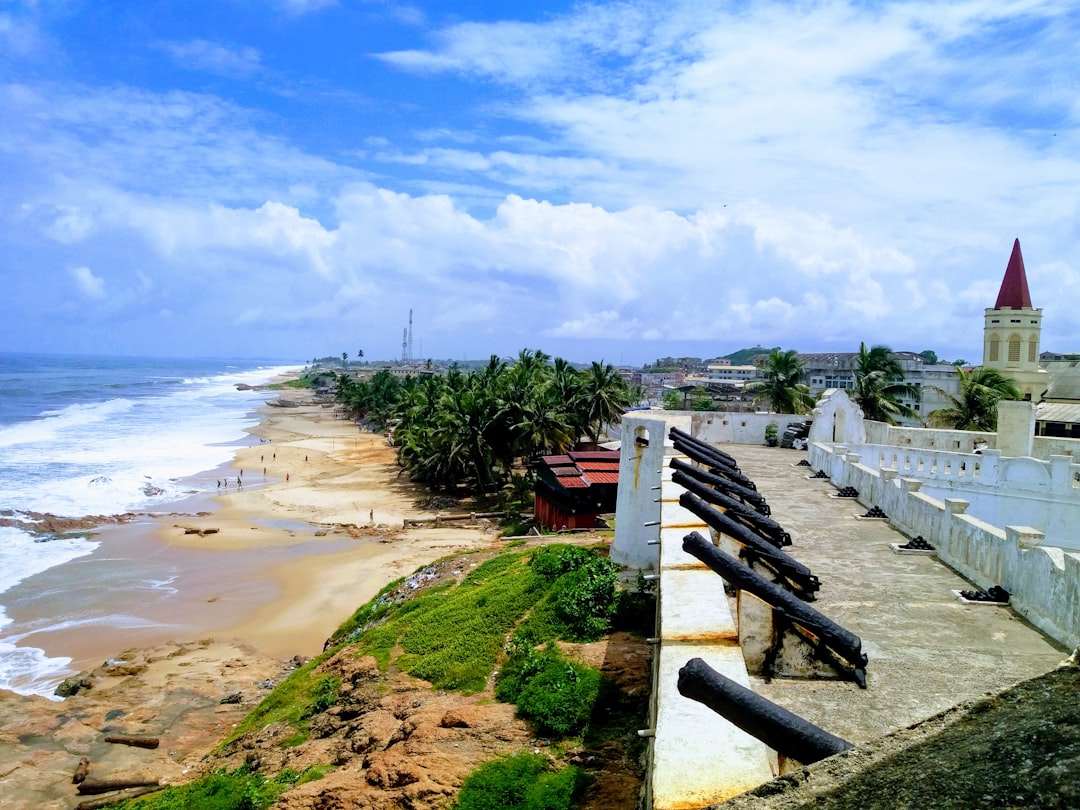
Roughly 30 to 40 of these forts and castles still stand on Ghana’s coastline today. Together they were collectively inscribed as the “Forts and Castles, Volta, Greater Accra, Central and Western Regions” UNESCO World Heritage Site in 1979 — one of the earliest African sites to receive that designation, specifically for their testimony to the Atlantic gold and slave trades. Ghana’s Tourism Authority has cited a figure that around 75% of all the slave-trading forts ever built on the West African coast are located here, more than any other country. When people search for a “Ghana slave castles tour,” Cape Coast Castle and Elmina Castle — 13 kilometers apart on the same stretch of coast — are the two everyone means.

EVERYTHING HANDLED FOR YOU
Akwaaba Covers the Full Trip — Not Just the Tour
Cape Coast Castle: From Trading Post to the Largest Holding Site on the Gold Coast
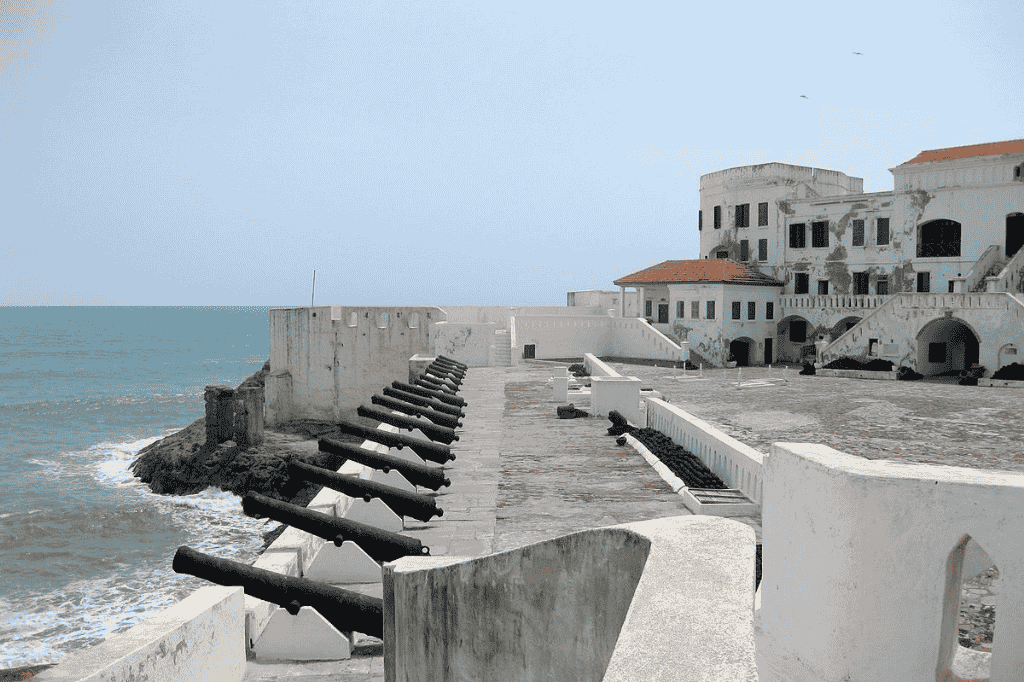
Cape Coast Castle started small. Portuguese traders built a modest lodge here in 1555 and named it “Cabo Corso.” By 1652, the Swedish Africa Company had expanded it into a proper fort — Fort Carolusburg — trading gold, ivory and timber. Swedish control lasted barely a decade. Britain seized it in 1664, renamed it Cape Coast Castle, and over the next two centuries turned it into the administrative and military headquarters of British interests on the Gold Coast.
France attacked the castle by sea in 1757, and the British rebuilt its walls out of granite, broken seashell and sand — the structure that still stands today. As the British slave trade scaled up through the 1700s, the castle’s storerooms became some of the largest holding dungeons on the coast, at times confining more than 1,000 enslaved people underground at once, in the dark, for weeks awaiting a ship. Britain formally abolished the slave trade in 1807 — the castle then pivoted to legitimate trade in gold, ivory and pepper — and it remained the seat of British colonial government until 1877, when the administration relocated to Christiansborg Castle in Accra.
What every visitor walks through today is the same route the enslaved were forced along: the male and female dungeons, the punishment cells, and finally the Door of No Return — a passage built wide enough to march people out in groups, onto waiting canoes, and out to the ships anchored offshore. It is the single most-cited stop on any Ghana heritage itinerary, and the reason UNESCO singled the site out by name.
Elmina Castle: Sub-Saharan Africa’s Oldest European Building
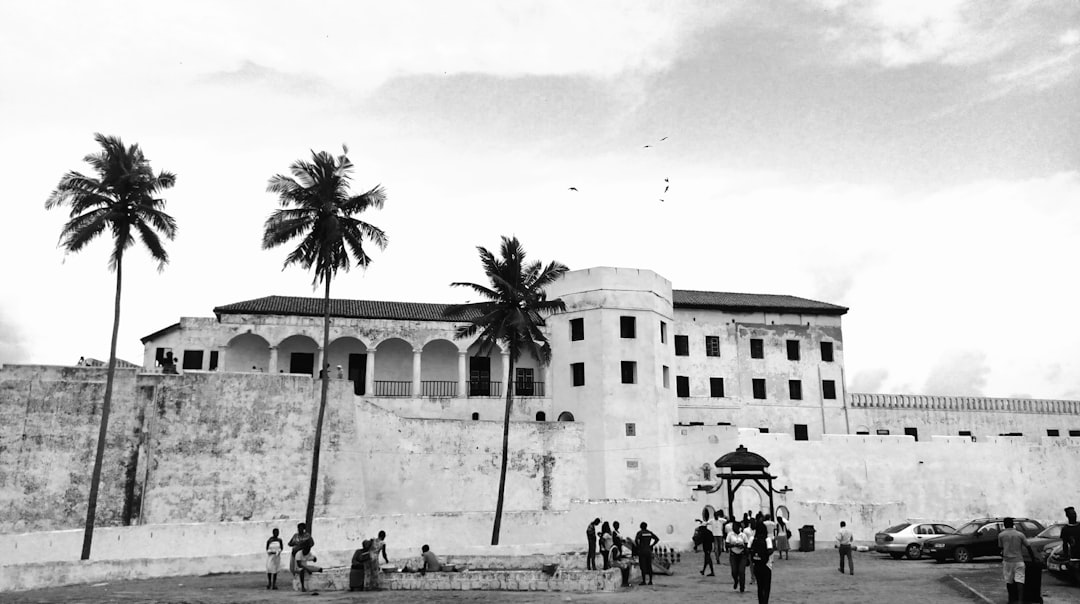
Elmina Castle predates Cape Coast Castle by about 170 years. Portuguese traders built it in 1482 as Castelo de São Jorge da Mina — St. George’s Castle — making it the oldest European structure still standing in sub-Saharan Africa. The Dutch seized it in 1637, folded it into the Dutch West India Company’s network, and by 1642 controlled the whole former Portuguese Gold Coast from it. Dutch traders ran the slave trade out of Elmina until roughly 1814; the fort itself only passed to British control in 1872, when the Dutch formally sold their remaining Gold Coast holdings.
Elmina’s Door of No Return is narrower than Cape Coast’s — built for a single-file line rather than a group march, a structural detail guides point to as evidence of how the two castles’ operations differed in scale and era. The dungeons here held prisoners of war too, not only trade captives: the British held the exiled Asante king, Prempeh I, in one of Elmina’s turret rooms after the 1896 Anglo-Asante war, before his eventual exile to the Seychelles. The small fishing town of Elmina that grew up around the castle is widely regarded as the first point of sustained contact between Europeans and people of the Gold Coast — which is part of why UNESCO’s citation treats Elmina as the origin point of the whole 300-mile fort network, not just one stop on it.
The Door of No Return — and Why Ghana Now Calls It the Door of Return
At both castles, the final doorway enslaved people were marched through has one name carved into how it’s remembered: the Door of No Return. It was the last threshold between the continent and the hold of a ship — the point after which return was, for almost everyone who passed through it, permanently impossible. Guides at both sites still walk visitors through that exact doorway as the closing stop of the tour, facing out toward the Atlantic.
What’s changed is what the door means walking back through it. Ghana’s government and diaspora organizations now refer to the same threshold, taken in the other direction, as the Door of Return — the symbolic act of a diasporan walking back in, against the current of history. That reversal isn’t a marketing phrase invented for tourism; it’s the literal ceremonial act performed at events like the annual Emancipation Day commemorations, where diaspora visitors are formally welcomed back through the same door.
Assin Manso: The “Last Bath” and the 1998 Reburial
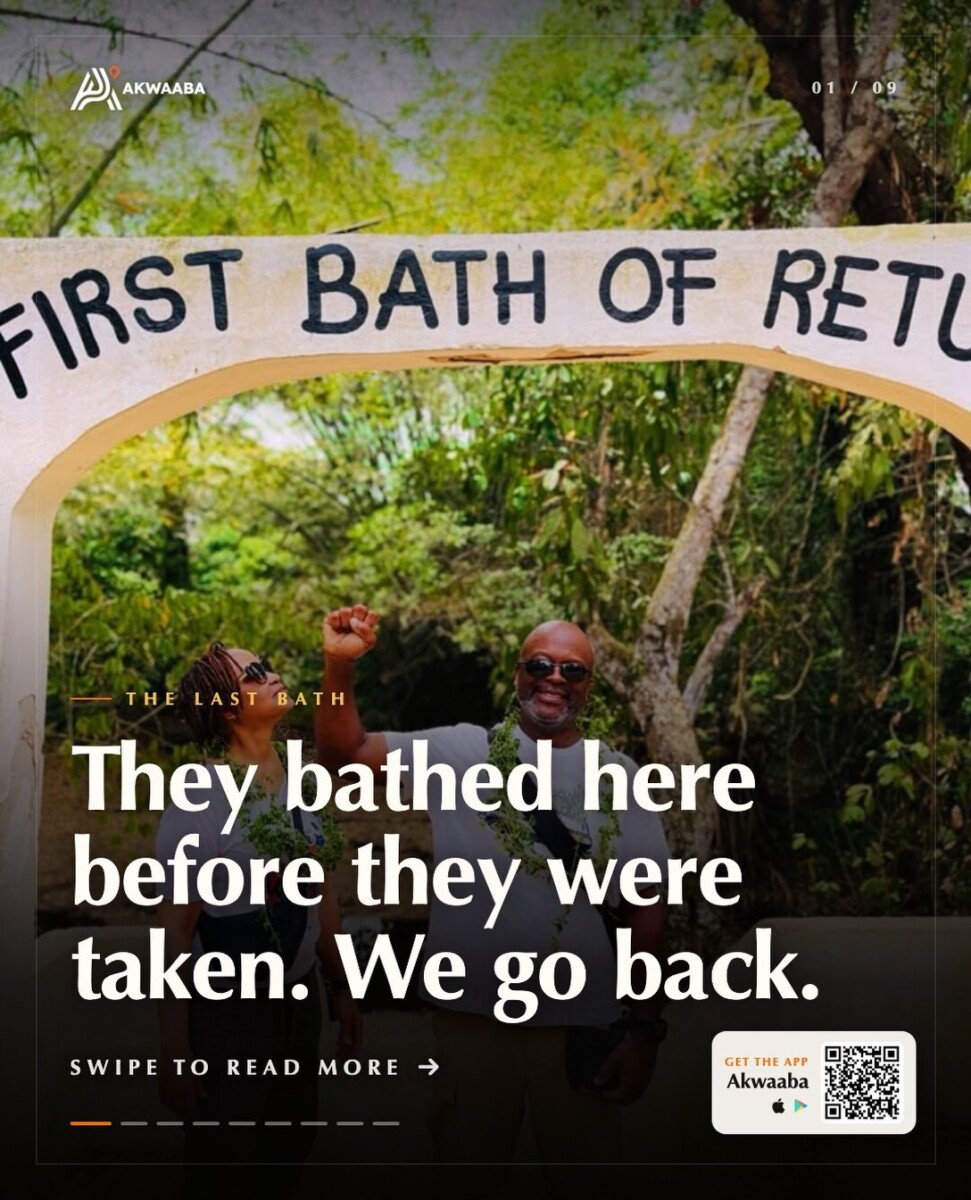
Most one-day castle tours skip this stop; the deeper heritage itineraries don’t. Assin Manso, also known as Donkor Nsuo (“slave river”), sits about an hour inland from Cape Coast. It was the last waypoint before the coast — where captives marched from the interior and from as far as northern Ghana were held, fed, and forced to bathe in the river one final time before continuing to Cape Coast or Elmina. Locals call it the place of the “last bath.”
Assin Manso is also where Ghana staged one of its most significant diaspora reconciliation acts. On July 31–August 1, 1998, the remains of two diasporans were exhumed and ceremonially reburied at the site: Samuel Carson, whose remains came from the African Burial Ground in Manhattan, New York, and a woman known as Crystal, repatriated from Jamaica. The site now has a Memorial Wall of Return, where descendants of the enslaved write their names, and Ghana marks the anniversary with an annual commemoration. It’s the emotional midpoint that turns a castle visit into a fuller pilgrimage — which is exactly why Akwaaba’s Ancestral Tour routes through Assin Manso before Cape Coast, not the other way around.
Why This Route Is a Homecoming, Not a Sightseeing Stop
In September 2018, President Nana Akufo-Addo declared 2019 Ghana’s “Year of Return” — timed to the 400th anniversary of the first enslaved Africans arriving in Jamestown, Virginia, in 1619. Run by the Ghana Tourism Authority with the Office of Diaspora Affairs and the PANAFEST Foundation, the campaign turned Cape Coast, Elmina and Assin Manso into the physical route of a national reconciliation project, not just a heritage-tourism circuit. The 2019 PANAFEST/Emancipation Day events alone included an Assin Praso river crossing, an “Akwaaba Ceremony” inside the Elmina Castle dungeons, and the Emancipation Day bath-and-wreath ceremony at Assin Manso — the same three sites, walked in sequence, that a slave-castles tour still follows today.
PANAFEST — the Pan-African Historical Theatre Festival — has run every two years since 1992 specifically to bring the continent and the diaspora together around this history, and Emancipation Day observances happen every year in late July/early August. If your trip lands in that window, the castles double as the physical setting for a live, ongoing commemoration — not a static museum circuit.
How to Actually Book This Tour
Three real, live products cover this route, at different depths:
- Cape Coast Castle + Elmina + Kakum — Heritage Day Tour ($159.29) — the full castle-to-castle route in a single guided day from Accra, plus Kakum National Park’s canopy walk. The most direct match for a first “slave castles tour” search, and the easiest entry point if you have one day.
- Ancestral Tour — Assin Manso & Cape Coast Heritage Day ($249, or $199 each for 2+, from Accra) — routes through Assin Manso’s Slave River site before Cape Coast, for travelers who want the full ancestry-pilgrimage arc, not just the castles. Pair it with the Ancestry Consultation add-on ($100) — a DNA-ancestry reading session with a Ghanaian historian, built for diaspora travelers tracing a specific lineage.
- Return to Source (4 days) — an ancestral journey: Assin Manso’s Slave River, Cape Coast Castle, the Du Bois Centre, guided historian sessions, and a reflection ceremony. Akwaaba’s Roots & Remembrance package ($510) is a shorter alternative built around the same castles.
Every option includes a licensed local guide — required by law to enter the dungeons at both castles — plus transport from Accra and entry fees. If you only need visitor logistics for one specific site — opening hours, entry fees, what to wear, how long to allow — Akwaaba’s standalone guides go deeper on each: Cape Coast Castle visitor guide, Elmina Castle visitor guide, and the Assin Manso Slave River guide.
Frequently Asked Questions
Can you visit both Cape Coast Castle and Elmina Castle in one day?
Yes — they’re 13 kilometers apart. Akwaaba’s Cape Coast + Elmina + Kakum Heritage Day Tour covers both castles plus Kakum National Park’s canopy walk in a single guided day from Accra.
Which castle should I prioritize if I only have time for one?
Cape Coast Castle held the larger volume of captives and is the more commonly cited site in African-American heritage narratives specifically; Elmina Castle is older (1482 vs. 1555) and its Door of No Return is the more architecturally distinct of the two. Most one-day tours, including Akwaaba’s, cover both back to back since they’re so close together.
Is Assin Manso worth adding to a castles tour?
If ancestry or reconnection is part of why you’re going, yes — it’s the site of the 1998 reburial of Samuel Carson and Crystal, and the “last bath” waypoint before the coast. Akwaaba’s Ancestral Tour routes through it before Cape Coast Castle.
Do I need a guide inside the castles?
Yes — guided tours are mandatory to enter the dungeons at both Cape Coast and Elmina, and it’s included in every Akwaaba tour and entry ticket.
Is this the same route as Ghana’s “Year of Return”?
Essentially, yes. The 2019 Year of Return campaign built its flagship PANAFEST/Emancipation Day events around this exact sequence — Assin Manso, Elmina, Cape Coast — and it remains the backbone of Ghana’s diaspora-homecoming tourism today.
How much does a Ghana slave castles tour cost?
Akwaaba’s day tour starts at $159.29 for the Cape Coast + Elmina + Kakum route. The deeper Ancestral Tour is $249 ($199 each for 2+), and the 4-day Return to Source package runs longer with flights, stays and a full diaspora-focused itinerary included, from $1,400.


EVENTS IN GHANA
What's On in Ghana This Week
Festivals, concerts, cultural events, and experiences — updated every week.
Browse Events →
Lock in your Ghana trip for just $100 down
Flights, vetted stays, local guides and SanlamAllianz insurance — all handled. Reserve your spot with $100, pay the balance later.
FROM @AKWAABA.APP
See What Ghana Actually Looks Like
Our six latest posts on Instagram

Plan your homecoming
Ready to experience Ghana for real?
Akwaaba handles the whole trip — curated packages, day experiences, and the hottest events. Just $100 reserves your spot, and you can split the balance into easy payments.
Use code AKWAABA for 5% off your first booking