Akwaaba App

Fiok Festival — First Fruits Celebration of the Talensi People

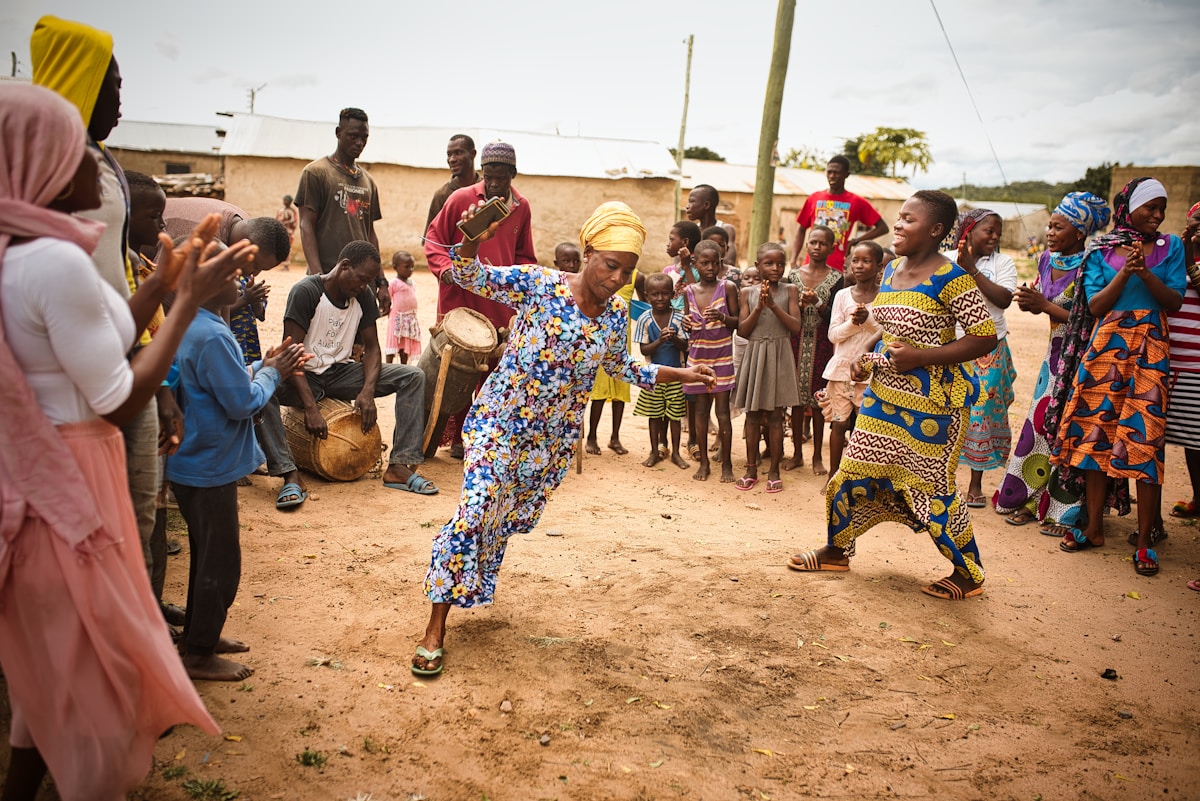
Traditional dance celebration in Northern Ghana during harvest festival

In the red-earth landscape of Ghana’s Upper East Region, where the Sahel meets the savanna and the air is hot and dry for nine months of the year, the Talensi people gather each October at a place where rocks whistle with the voices of their ancestors. The Fiok festival — the Talensi first fruits celebration — takes place in and around the sacred Tongo Hills, one of the most spiritually significant sites in West Africa and a serious contender for UNESCO World Heritage status.

This is not a festival you will find on tourist brochures. The Upper East Region receives a fraction of Ghana’s visitors, and the Tongo Hills area has almost no tourism infrastructure. But for those willing to make the journey — and it is a journey, 7+ hours from Accra — Fiok offers something rare: a window into a spiritual tradition that has been continuous for centuries, in a landscape that feels otherworldly.

The Tongo Whistling Rocks

EVERYTHING HANDLED FOR YOU

Akwaaba Covers the Full Trip — Not Just the Tour

Flights
Flight deals & booking assistance to Accra
🛂
Visa
Ghana entry requirements & visa guidance
🏠
Accommodation
Curated hotels, guesthouses & Airbnbs
🎭
Experiences
Tours, events, food & cultural immersion

The Tongo Hills are a cluster of granite formations near the town of Tongo, approximately 25 km south of Bolgatanga, the Upper East regional capital. The rocks produce a distinctive whistling sound when wind passes through narrow passages in the formations. The Talensi believe these sounds are the voices of their ancestors — not metaphorically, but literally. The shrine complex at Tengzug, a small village at the base of the hills, is one of the most active traditional shrines in Ghana.

The shrine is a maze of small, ancient clay dwellings scattered with protective fetishes — carved figures, pottery, animal skulls, and objects whose purpose is known only to the priests. Walking through Tengzug is disorienting in the best way. The buildings are organic, seemingly growing out of the rock face, and the atmosphere is heavy with spiritual significance. This is not a reconstruction or a museum. People live and worship here exactly as their ancestors did.

When Fiok Happens

Fiok is celebrated in October–November, timed to the first harvest of millet and guinea corn — the staple crops of the Upper East Region. The exact date is set by the Tongraan (paramount chief) based on the agricultural calendar and consultation with shrine priests. The festival typically spans two to three days.

What Happens During Fiok

The First Fruits Offering

The Tongraan presents the season’s first harvested grain to the ancestors at the Tongo Shrine. This is not a symbolic gesture — until the first fruits have been offered, it is considered spiritually dangerous for anyone in the community to consume the new harvest. The offering lifts this prohibition and signals that the community may eat freely. The ceremony involves elaborate libations, prayers recited in Talen (the Talensi language), and the slaughter of a sacrificial animal.

Shrine Pilgrimage

Community members make a pilgrimage to the Whistling Rocks, where they offer personal prayers and seek guidance from the shrine priests. The priests — called Tengdaana (earth priests) — serve as intermediaries between the living and the ancestral world. Visitors may observe the pilgrimage from a distance, but entering the shrine complex requires permission from the Tengdaana and a small offering (typically GHS 20–50 and a bottle of schnapps or local pito).

Communal Feasting

After the spiritual obligations are fulfilled, the festival becomes a community party. Pito — a mildly alcoholic millet beer that is the social lubricant of northern Ghana — flows freely. Traditional dishes made from the new harvest are shared. Drumming and dancing continue through the evening, with performances by community groups that have been rehearsing for weeks.

Getting to Tongo

This is the part where honesty matters more than marketing:

  • From Accra: 7–8 hours by road, or a 1-hour flight to Tamale + 3 hours by road to Tongo via Bolgatanga. The road from Tamale to Bolgatanga is paved and decent. The final stretch to Tongo is a laterite road — passable but rough.
  • From Bolgatanga: 30 minutes south by road. Bolgatanga is your base — the best accommodation and services in the area are here.
  • Accommodation: Tongo itself has no hotels. Stay in Bolgatanga — the Sand Garden Hotel and Black Star Hotel are adequate. Don’t expect luxury; this is one of Ghana’s poorest regions.
  • Essentials: Bring cash (no reliable ATMs accept international cards in Tongo), water, sun protection, and sturdy shoes. The terrain is rocky and uneven. The nearest pharmacy or hospital of any size is in Bolgatanga.

Combining Fiok with Northern Ghana

  • Paga Crocodile Pond — sacred crocodiles you can touch and photograph (1 hour north of Bolgatanga, at the Burkina Faso border)
  • Sirigu Painted Houses — the famous hand-painted compound houses of the Sirigu women (45 minutes from Tongo)
  • Mole National Park — Ghana’s largest wildlife reserve with elephants, antelope, and guided walking safaris (4 hours west of Bolgatanga). See adventure activities.
  • Northern Ghana travel guide — our complete guide to planning a northern trip

Visit with Akwaaba

Fiok is best experienced as part of a multi-day Northern Ghana cultural tour. Akwaaba arranges 4–7 day itineraries covering Tongo, Paga, Sirigu, and Mole — with Fiok as the centerpiece when the timing aligns. Browse packages or contact us for custom scheduling.

Frequently Asked Questions

Can I visit the Tongo Shrine outside of Fiok?

Yes. The shrine complex is accessible year-round with permission from the Tengdaana. A local guide (GHS 50–100) is essential — both for navigation and for cultural mediation.

Is the Upper East Region safe?

Yes. The Upper East is one of the safest regions in Ghana. Violent crime is rare. The main risks are sun exposure and road conditions — not personal safety.

How long should I spend in the area?

Minimum 2 nights in Bolgatanga to allow a full day at Tongo plus time to visit Paga or Sirigu. Ideally 4 nights to include Mole National Park.

Is photography allowed at the shrine?

With permission and a donation, yes for exterior areas. Interior shrine chambers are off-limits to photography. Always ask your guide before lifting a camera.

Understanding the Tengdaana System

The Tengdaana — earth priest — is perhaps the most important figure you will encounter in the Tongo Hills area. Unlike chiefs, whose authority is political, the Tengdaana’s authority is spiritual. He is the custodian of the land, the intermediary between the living community and the earth gods who control fertility, rainfall, and agricultural success. During Fiok, the Tengdaana’s role is central: no harvest can be consumed until he has performed the first fruits offering.

The Tengdaana system predates chieftaincy in the Upper East Region. When the British colonial administration introduced indirect rule through chiefs, they essentially layered a political authority on top of an existing spiritual one. The two systems coexist today, sometimes in tension. The chief handles governance; the Tengdaana handles the relationship between people and land. During Fiok, it is the Tengdaana, not the chief, who holds the most important ritual authority.

If you visit the shrine, the Tengdaana or one of his assistants will guide you. The interaction is formal but welcoming. You will be asked to remove your shoes before entering certain areas, and to avoid wearing red (which has specific spiritual associations). Your guide will explain these protocols — follow them precisely. This is not a tourist attraction with flexible rules; it is an active place of worship.

The Landscape Itself

The Tongo Hills landscape is unlike anything else in Ghana. Massive granite boulders — some the size of houses — are scattered across dry, red-earth terrain dotted with baobab trees and thorn scrub. The compound houses of the Talensi villages are built directly into the rock face, their walls made from local laterite that matches the surrounding earth so closely that the buildings seem to grow from the ground.

In the dry season (October–March), the landscape is stark and dramatic — all red earth, grey rock, and leafless trees under a relentless sun. During the rains (May–September), everything greens up dramatically. Fiok falls right at the transition point, when the first harvested grain signals that the rains were sufficient and the land has provided.

For photographers, the Tongo Hills are extraordinary at any time of year. The interplay of rock, architecture, and light — especially in the golden hour before sunset — produces images that look like nothing else on the planet. If you are serious about photography, build in extra time just for the landscape.

What to Expect Honestly

The Upper East Region is one of the poorest in Ghana. Infrastructure is limited. Roads to Tongo are rough. Accommodation in Bolgatanga is functional but not luxurious. The food is excellent but simple — TZ (tuo zaafi, a millet-based staple), groundnut soup, and grilled guinea fowl are the staples. There is no nightlife, no craft beer bar, no boutique hotel.

What you get instead is authenticity at a level that is increasingly rare in Ghana’s more-visited regions. The ceremonies are real. The interactions are genuine. The landscape is staggering. And the cultural depth — a spiritual system that has been continuous for centuries, centered on rocks that literally sing — is worth every minute of the long drive from Accra.

EVENTS IN GHANA

What's On in Ghana This Week

Festivals, concerts, cultural events, and experiences — updated every week.

Browse Events →
REAL TRIPS · REAL PEOPLE

See What Ghana Actually Looks Like

From our travelers’ feeds — unfiltered Ghana experiences

Detty December in Ghana Traditional Ghanaian dance Accra from above Cape Coast Castle Kakum canopy walk Accra nightlife

Plan your homecoming

Ready to experience Ghana for real?

Akwaaba handles the whole trip — curated packages, day experiences, and the hottest events. Just $100 reserves your spot, and you can split the balance into easy payments.

Use code AKWAABA for 5% off your first booking · Rated 4.7★ by 140+ travelers

Share this post

You might also like

Have Any Question?

Simply want to share your thoughts, Kindly reach out.​

+233 59 895 4903

🎒 Ready to Explore Ghana? 🇬🇭

Get personalized packages, hidden gems, and real experiences—plus flights, visas, insurance, stays, and tours powered by our Sanlam Alliance Insurance partnership.
Please select a valid form
Need help planning your Ghana trip? Chat with us! We typically reply in minutes