Before the first rains fall on the red laterite soil of the Upper East Region, before the farmers plant their millet and guinea corn, the Talensi people of Tongo-Tengzug gather for the Gologo festival — a three-day ceremony of sacrifice, prayer, and celebration that asks the gods for one thing: a good harvest and enough rain to sustain it.
Gologo (also called Golib) is celebrated in March, at the end of the dry season when the land is parched and the stakes are existential. In the Upper East Region, where agriculture is rain-dependent and modern irrigation is scarce, the difference between a good rainy season and a bad one is the difference between food security and hunger. Gologo is not a quaint folk custom. It is a community’s annual negotiation with the forces that determine whether they eat.
Important correction: Gologo is celebrated by the Talensi people of the Upper East Region — specifically the communities around Tongo-Tengzug, near Bolgatanga. It is NOT a Sissala festival and it is NOT in the Upper West Region. Some sources (including an earlier version of this page) incorrectly attributed Gologo to the Sissala. The festival is Talensi, centered on the Nnoo shrine and the Golib god that regulates Talensi agricultural life.
The Nnoo Shrine and the Golib God
At the center of Gologo is the Nnoo shrine — one of the most powerful traditional shrines in the Talensi spiritual system. The Golib god, associated with this shrine, is believed to control the agricultural cycle: when to plant, when the rains will come, and how abundant the harvest will be. The festival’s primary purpose is to make offerings to the Golib god and request favorable conditions for the coming growing season.
The shrine complex sits within the same Tongo Hills area as the Tengzug Whistling Rocks (which feature in the Fiok festival, held later in the year after the harvest). The landscape itself feels ceremonial — massive granite boulders, ancient baobab trees, and compound houses built directly into the rock face.
EVERYTHING HANDLED FOR YOU
Akwaaba Covers the Full Trip — Not Just the Tour
Participating Communities
Gologo is not a single-town event. Eight Talensi communities participate: Tengzug, Santeng, Wakii, Gbeogo, Yinduri/Zandoya, Shia, Gorogo, and Spart. Each community sends representatives, and the festival’s rituals involve coordinated participation across all eight. The scale of coordination — across communities separated by kilometers of rough terrain, with no formal written communication system — is itself a testament to the organizational sophistication of traditional Talensi society.
What Happens During the Three Days
Day 1: Sacrifices at the Shrine
Elders and shrine priests from all eight communities gather at the Nnoo shrine. Sacrificial animals (typically chickens and goats) are offered, and libations of pito (millet beer) and schnapps are poured. The Tengdaana (earth priest) leads prayers asking the Golib god for sufficient rainfall, healthy crops, and protection from pests and disease. The language is Talen, spoken in rapid, rhythmic cadences that sound almost like chanting.
Day 2: Traditional Costumes and Composed Songs
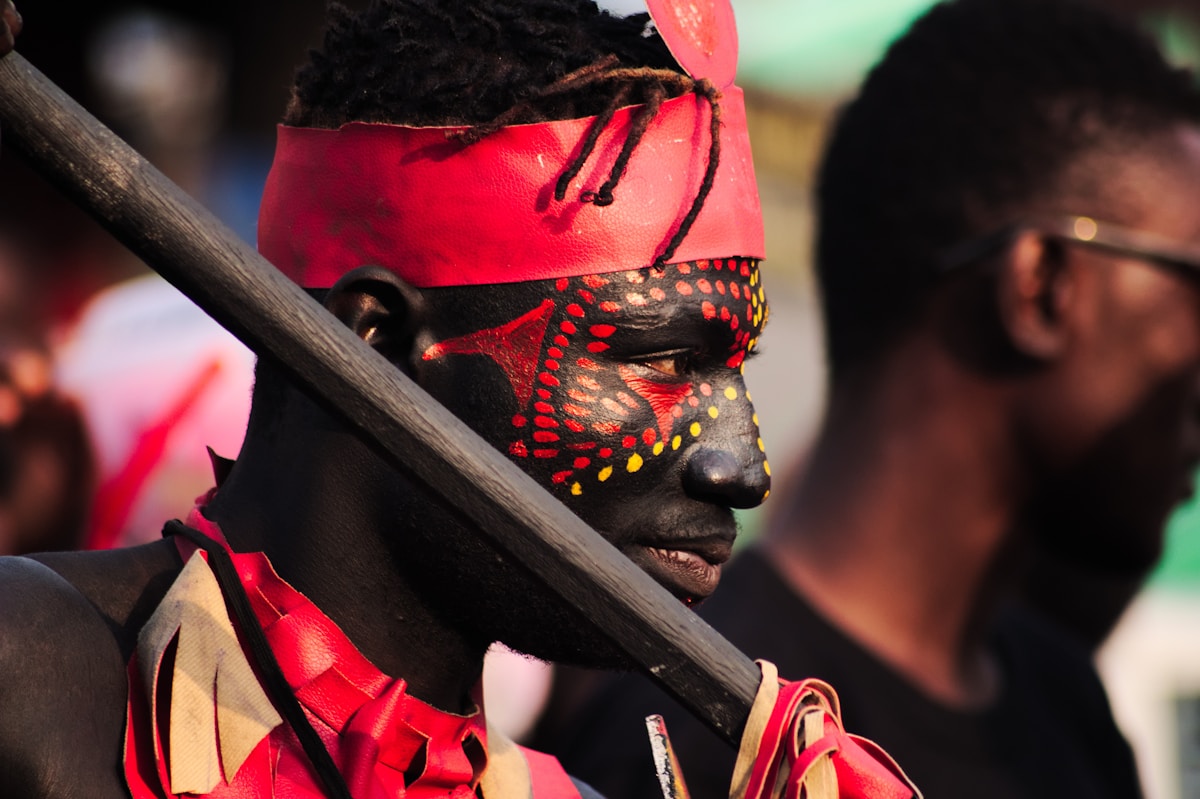
The second day is the public celebration. Community members dress in prescribed traditional attire: men wear short knickers with a towel draped across the chest; women tie a long cloth from chest to feet and cover their heads with specially woven local cloth. These are not optional costume choices — the dress code is enforced by tradition and deviation is frowned upon.
Each community prepares original songs for the occasion. The songs are composed by elders specifically for that year’s Gologo, addressing current events, community concerns, moral lessons, and sometimes pointed social commentary. Hearing a new Gologo song for the first time is a communal experience — reactions range from laughter to solemn nodding, depending on the subject matter.
Day 3: Dancing, Feasting, and Community
The final day is the most festive. Dancing to the composed songs continues throughout the day, accompanied by drums and xylophone-like instruments. Pito flows. Food prepared from stored grain (the new harvest hasn’t arrived yet — that’s the point of the prayers) is shared communally. By evening, the festival transitions from formal ceremony to a looser, more social gathering that continues late into the night.
When and Where
When: March, at the end of the dry season, before planting. Exact dates are set by the traditional council.
Where: Tongo-Tengzug area, Talensi District, Upper East Region. Same location as the Fiok festival, but six months earlier in the agricultural calendar.
Getting there: Same logistics as Fiok — base in Bolgatanga (30 minutes north), plan for rough roads to Tongo itself. See the Fiok festival page for detailed travel logistics, accommodation, and practical advice.
Visit with Akwaaba
Gologo can be included in a Northern Ghana cultural tour alongside Paga, Sirigu, and Mole National Park. March is dry season — hot but ideal for wildlife viewing at Mole (animals gather at waterholes). Browse packages or contact us for scheduling.
Frequently Asked Questions
Is March a good time to visit Northern Ghana?
Yes for festivals and wildlife (Mole is excellent in dry season). No for lush scenery — the landscape is brown and dry. Temperatures regularly exceed 38°C. Bring sun protection and drink constantly.
What should I offer at the shrine?
If you visit the shrine, a bottle of schnapps and GHS 50–100 is the standard offering for visitors. Your guide will advise on protocol.
The Importance of Rain in Talensi Life
To understand why Gologo matters, you need to understand what rain means in the Upper East Region. This is not a place where rainfall is a given. The region sits on the edge of the Sahel — the transitional zone between the Sahara Desert and the tropical savanna. Annual rainfall is between 800 and 1,100 mm, concentrated almost entirely in a single wet season from May to October. If the rains come late, crops fail. If they stop early, crops wither. If they are excessive, fields flood and grain rots.
There is no irrigation infrastructure to speak of. The Vea Dam and Tono Dam provide limited water for irrigated farming in some areas, but the vast majority of Talensi farmers depend entirely on rain. Modern weather forecasting is available through government agricultural extension services, but the Tengdaana’s reading of spiritual signs remains, for many farming families, the more trusted source of guidance on when to plant.
Gologo’s prayers for rain are not abstract spirituality. They are the community’s collective response to a real and annual threat. When the Tengdaana sacrifices a goat and pours libations asking the Golib god for sufficient rainfall, every farmer present knows exactly what is at stake. The ceremony’s emotional weight comes from this economic reality — not from performance, but from genuine need.
The Music of Gologo
The songs composed for each year’s Gologo deserve special attention. Unlike most Ghanaian festival music, which draws on established repertoire, Gologo songs are new compositions created specifically for each celebration. The elders of each of the eight participating communities write songs that address the year’s events — sometimes celebrating achievements, sometimes mourning losses, sometimes offering pointed social commentary that names specific individuals and their behavior.
This tradition makes Gologo a living newspaper as much as a spiritual event. If a community leader has been corrupt, a Gologo song will say so. If a farmer achieved something remarkable, a song will honor it. If there is a dispute between communities, a song will address it — sometimes diplomatically, sometimes not. The composed songs are performed publicly, and the community’s reaction — laughter, cheering, uncomfortable silence — tells you everything about whether the songwriter hit the mark.
The musical style is distinctive to the Upper East: polyrhythmic drumming using the luna (hourglass tension drum) and various hand drums, with call-and-response vocals in Talen. The xylophone-like gyil — more commonly associated with the Upper West Region — also features in some communities’ performances, reflecting cultural exchange across the northern regions.
Why Visit Gologo Instead of Larger Festivals
Ghana has dozens of festivals that are easier to reach, better documented, and more tourist-friendly than Gologo. So why make the effort?
Because Gologo gives you something the big festivals cannot: participation in a ceremony where the spiritual dimension is not historical or symbolic but present and active. When the Tengdaana prays for rain at Gologo, he is not reenacting something his ancestors did. He is doing what his community needs him to do, right now, for their survival this year. The distinction between heritage performance and living practice is the difference between watching a play about farming and watching a farmer plant.
For visitors who have already experienced Homowo, Panafest, or Detty December and want to go deeper into Ghanaian culture — beyond the coast, beyond the Akan heartland, into the traditions of the north that most tourists never see — Gologo is one of the most rewarding destinations in the country.
EVENTS IN GHANA
What's On in Ghana This Week
Festivals, concerts, cultural events, and experiences — updated every week.
Browse Events →
Lock in your Ghana trip for just $100 down
Flights, vetted stays, local guides and SanlamAllianz insurance — all handled. Reserve your spot with $100, pay the balance later.
FROM @AKWAABA.APP
See What Ghana Actually Looks Like
Our six latest posts on Instagram