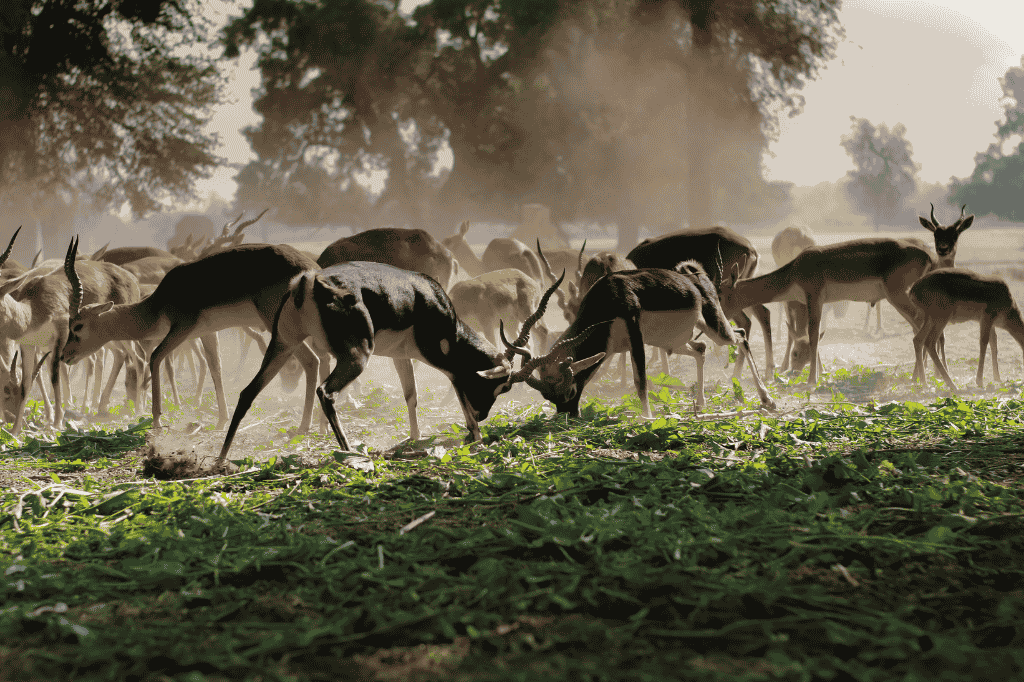
Located on the coast of West Africa, Ghana sits in a remarkable ecological sweet spot — where savannah meets rainforest, rivers carve through ancient reserves, and the Atlantic Ocean shapes a wildlife-rich coastline. The country supports over 700 animal species across its national parks, community sanctuaries, and protected reserves. Ghana’s wildlife may not be as famous as East Africa’s Big Five circuit, but for travellers who know where to look, it offers some of the most accessible, affordable, and genuinely wild encounters on the continent.
This guide covers every major park, the best animals to see, practical logistics, entry fees, and the best time to visit — everything you need to plan a real wildlife trip to Ghana.
Ghana’s Remarkable Wildlife Diversity
With savannahs in the north, tropical rainforests in the south, wetlands along the Volta River system, and a 540km Atlantic coastline, Ghana offers more habitat variety than most visitors expect. The country straddles two major biomes — the Guinea savannah and the Upper Guinea forest — each supporting distinct communities of mammals, birds, and reptiles.
Ghana is home to species endemic or near-endemic to the Upper Guinea forest zone, including the Diana monkey, the bongo antelope, and the white-necked rockfowl (picathartes) — a bird so unusual it has its own family classification. For birders especially, Ghana is a premier destination: the national bird checklist exceeds 728 species.
Conservation Status
Ghana’s wildlife faces real pressure from habitat loss, illegal bushmeat hunting, and agricultural expansion. The government’s Wildlife Division manages 16 protected areas covering roughly 5% of the country’s land area. Community-based conservation projects — particularly the sacred monkey sanctuaries at Boabeng-Fiema and the Paga crocodile ponds — demonstrate that local stewardship is Ghana’s most effective conservation tool.
Sustainable tourism directly funds ranger salaries, anti-poaching patrols, and community benefit programmes at most of these reserves. Visiting — and paying the entry fees — is one of the most impactful things a traveller can do.
Forests, Wetlands, and the Coast
The rainforests of Ghana’s Western and Central regions contain the country’s greatest biodiversity. Kakum National Park’s canopy walkway puts you eye-level with the forest canopy where hornbills call and colobus monkeys leap between emergent trees. Further southwest, Ankasa Conservation Area is one of the least-visited and most pristine forest reserves in West Africa — home to the rare African golden cat and large populations of forest elephants.
The coast adds further dimension. Leatherback and green sea turtles nest on beaches near Ada Foah and the Volta River mouth between October and March. Humpback dolphins are occasionally seen offshore. The Muni-Pomadze Ramsar site near Winneba protects important mangrove and wetland habitat used by thousands of migrating waterbirds.
1 App.
Plan. Book. Explore Ghana.
- Plan your trip with AI
- Book experiences & stays
- Grab event tickets
- Earn & redeem rewards
- $50 airport chauffeur
- 24/7 trip support


Best Time to Visit for Wildlife
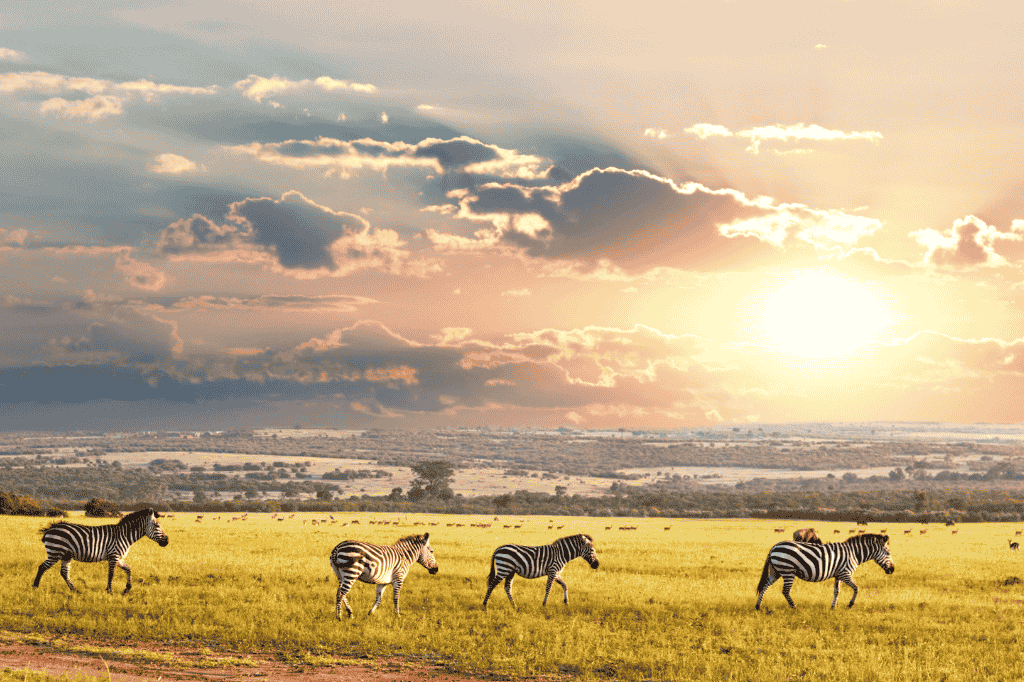
The dry season (November to April) is the best time for wildlife viewing across most of Ghana. In the northern savannah parks, animals concentrate around remaining water sources — waterholes at Mole become predictably busy with elephants, hippos, and warthogs from December through March. Vegetation thins out, making spotting much easier.
For forest wildlife and birdwatching, the shoulder seasons (October–November and March–April) work well — the forest isn’t completely parched, migratory birds are present, and trails are passable. Sea turtle nesting peaks October through February on the coast.
Planning a Ghana safari or wildlife trip?
Akwaaba plans the whole thing — game walk timing, Mole accommodation, transfers from Tamale. Free 30-minute call.
National Parks and Wildlife Sanctuaries
Mole National Park
Ghana’s largest and most visited wildlife reserve, Mole covers 4,840 square kilometres of Guinea savannah in the Northern Region. It is the best place in Ghana to see African elephants in the wild — herds of 50 or more gather at the waterholes below Mole Motel during the dry season, often within 200 metres of the viewing terrace. Other mammals include hippos, warthogs, African buffalo, roan antelope, waterbuck, hartebeest, olive baboons, patas monkeys, green monkeys, colobus monkeys, spotted hyenas, and leopards. Note: lions are locally extinct in Ghana — they are now effectively gone from the wild in Ghana.
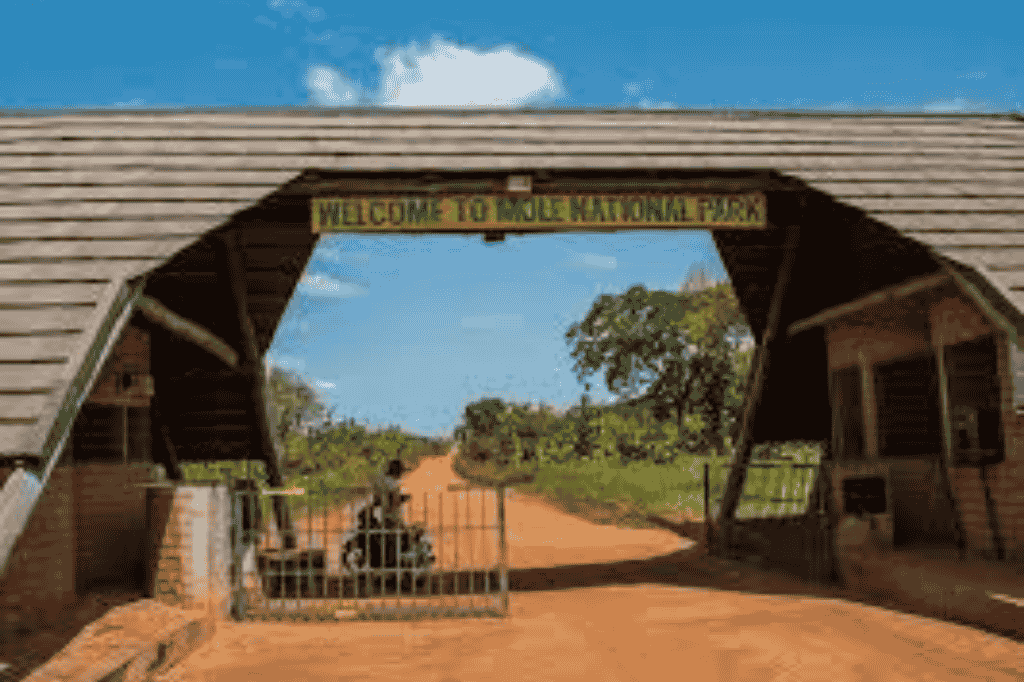
Getting there: Fly Accra to Tamale (1 hour, ~$60 one-way on domestic carriers) then hire a driver west to Mole (2.5 hours, ~GHS 200–300). Alternatively, the overnight VIP bus from Accra to Larabanga (the park gate village) takes 12–14 hours. Entry fees: GHS 150 for foreign visitors (approx $10). Walking safaris with an armed ranger cost an additional GHS 50–80. Mole Motel sits inside the park boundary — book ahead in peak season (Dec–Feb).
Pro tip: The waterhole at Mole is most active at dawn (6–8am) and late afternoon (4–6pm). Position yourself on the Motel terrace with binoculars before sunrise for the best elephant sightings.
Kakum National Park
Ghana’s most visited park sits in the Central Region, 30km north of Cape Coast. It is best known for its canopy walkway — seven rope bridges suspended up to 40 metres above the forest floor, stretching 333 metres through the rainforest canopy. The forest shelters African forest elephants, bongo antelopes, forest buffaloes, Diana monkeys, yellow-backed duikers, giant forest hogs, and over 266 bird species including African grey parrots, the yellow-casqued hornbill, and multiple species of sunbird. You can spot Diana monkeys, red river hogs, and African elephants along the walkway.
Getting there: 2-hour drive from Accra (200km via the N1). Day trips from Cape Coast are easy — taxis available from Cape Coast town for ~GHS 60 return. Entry fees: GHS 120 for foreign adults. Canopy walk is included. Early morning entry (before 8am) gives the best wildlife and bird activity.
Bui National Park
Located in the Bono Region along the Black Volta River, Bui is bisected by one of Ghana’s most important hippo habitats. The park holds a significant population of endangered West African hippopotami. Boat safaris on the Black Volta River offer extraordinary close-up views. Other wildlife includes leopards, spotted hyenas, olive baboons, antelopes, and crocodiles.
Wechiau Community Hippo Sanctuary
A remarkable community conservation success story in the Upper West Region, the Wechiau sanctuary protects a population of 100+ hippos along a 40km stretch of the Black Volta. Canoe safaris at dawn bring you within metres of pods surfacing in the calm river waters. The sanctuary is community-managed — entry fees go directly to participating villages. Entry fee: GHS 50 for foreigners plus canoe hire. Reached by 3-hour drive from Wa.
Shai Hills Resource Reserve
Just 50km from Accra, Shai Hills is the capital’s closest savannah wildlife experience. The reserve supports olive baboons, green monkeys, Maxwell’s duiker, ostriches (reintroduced), African rock pythons, monitor lizards, Nile crocodiles, and over 175 bird species. Guided walks and open-vehicle game drives are available. Entry fee: GHS 30 for foreigners. An easy half-day trip from Accra.
Nini Suhien National Park and Ankasa Conservation Area
Ghana’s most biologically significant forest, Ankasa in the far southwest contains some of the last intact primary rainforest in West Africa. It protects the largest remaining population of Diana monkeys in Ghana, as well as the extremely rare African golden cat, forest elephants, pangolins, leopards, and over 260 bird species including seven globally threatened species. The park is lightly visited and requires advance planning — for serious wildlife and birding enthusiasts it is one of Ghana’s most rewarding destinations.
Boin Tano Forest Reserve
The Bisao and Tano rivers create swampy areas at this reserve where yellow-backed duikers and ursine colobus primates move through riverine vegetation. The bush-covered areas are a reliable spot to see Ghana’s endangered forest birds, including the yellow-bearded greenbul and white-breasted guineafowl.
Paga Crocodile Pond
One of Ghana’s most unusual wildlife encounters: the sacred Nile crocodiles of Paga in the Upper East Region are completely tame, accustomed to humans for generations. Visitors can sit beside and even touch the crocodiles — entirely safe due to the animals’ deeply ingrained tolerance of humans. The local Kassena people regard the crocodiles as reincarnated community members and have protected them for centuries. Entry fee: GHS 30. Located 10km from Bolgatanga.
Birds in Ghana
With 728+ recorded species, Ghana is one of West Africa’s top birding destinations. The country sits within the Upper Guinea Endemic Bird Area — a globally significant zone for rare and range-restricted species.
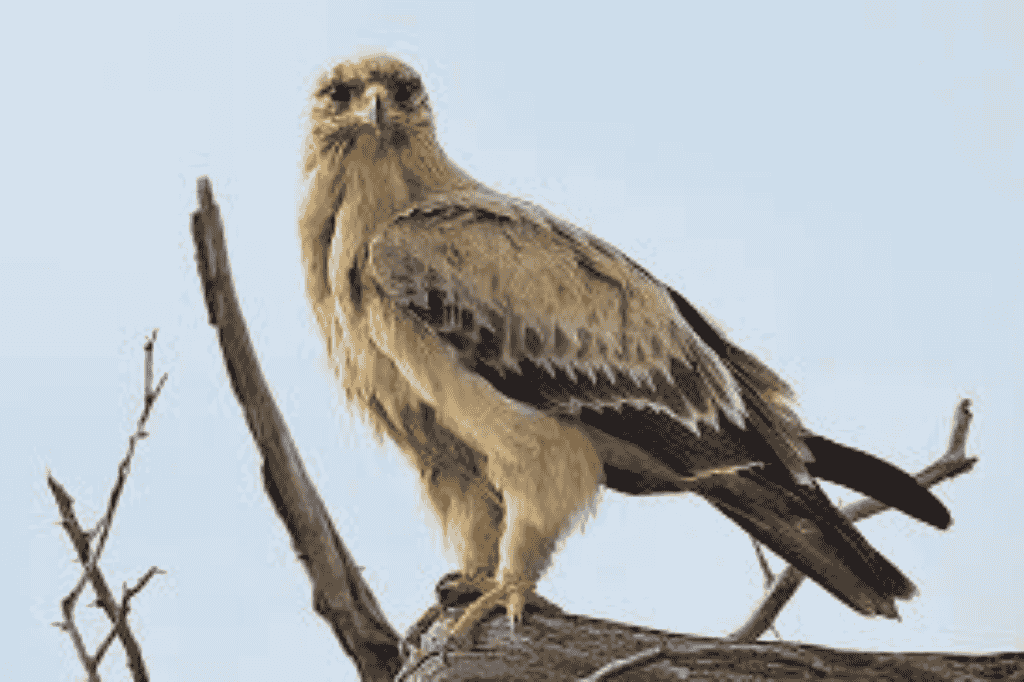
- Tawny Eagle — Ghana’s national bird, on the country’s coat of arms. Found in open savannah, particularly in the north.
- White-necked Rockfowl (Picathartes) — One of Africa’s most sought-after birds. Lives only in Upper Guinea forests; best seen at Bonkro, near Assin Foso.
- African Grey Parrot — Found in Kakum and Ankasa. Ghana is an important stronghold for this endangered species.
- Yellow-casqued Hornbill — A large, unmistakable forest hornbill seen in Kakum and Ankasa.
- Violet Turaco — Brilliant purple and crimson frugivore found in Shai Hills and Achimota Forest.
- White-crested Hornbill — Long black tail and brilliant white crest; follows monkey troops through the understorey.
- Carmine Bee-eater — Spectacular flocks at Mole during November migration.
- African Fish Eagle — Common along the Volta River system and at Bui National Park.
Large Mammals of Ghana
Ghana’s savannah and forest parks together support an impressive mammal checklist:
- African Elephant — Best seen at Mole (large savannah herds) and Kakum/Ankasa (smaller forest elephants).
- Hippopotamus — Significant populations at Bui National Park and Wechiau Sanctuary. Also seen at Mole’s waterholes.
- Leopard — Present in Mole, Bui, and the southern forest parks. Nocturnal and rarely seen, but camera traps occasionally record them, but they remain rare and are seldom seen.
- African Buffalo — Common at Mole, particularly around the waterholes in the dry season.
- Olive Baboon — Very common at Mole and Shai Hills. Do not feed them.
- Chimpanzee — Small populations in the Bia Conservation Area, Western Region. Rarely encountered without a specialist guide.
- Diana Monkey — Endangered; best seen at Ankasa and Nini Suhien.
- Colobus Monkey — Black and white colobus at Boin Tano and Kakum; red colobus at Ankasa.
- Warthog — Common at Mole, often seen near the lodge waterhole.
- Spotted Hyena — Heard more than seen at Mole; active after dark.
Reptiles and Amphibians in Ghana
- Nile Crocodile — Found throughout rivers and waterways. The sacred crocodiles at Paga Pond offer the most accessible encounter in West Africa.
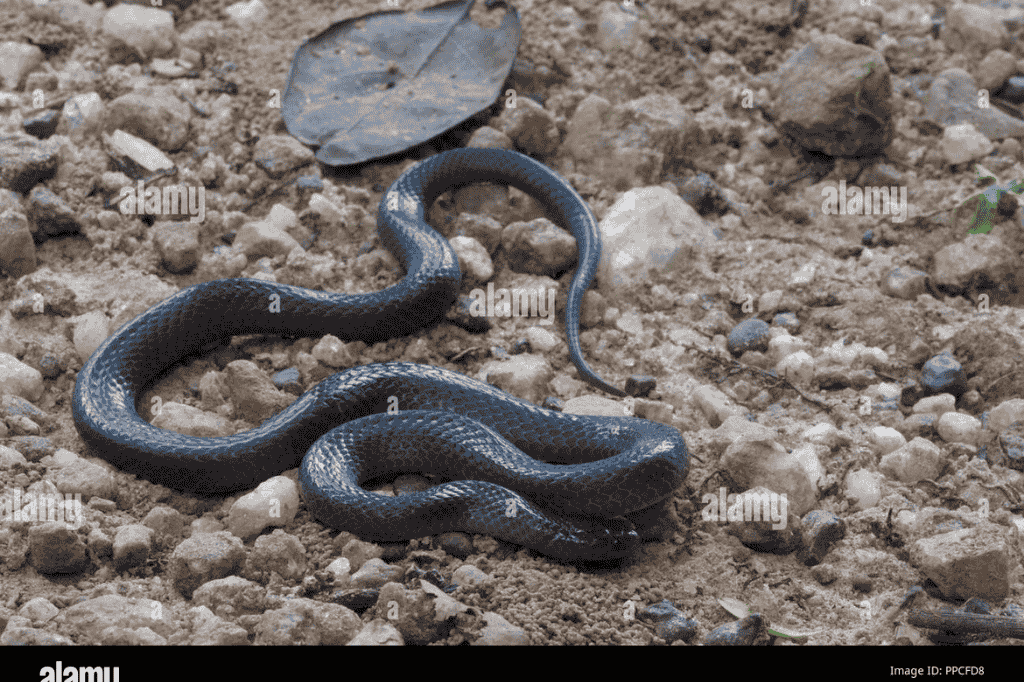
- African Rock Python — Africa’s largest snake, reaching up to 5 metres. Non-venomous but powerful. Found at Shai Hills and northern parks.
- Forest Cobra and Gaboon Viper — Venomous species present in southern forest parks. Rarely encountered on maintained trails.
- Monitor Lizard — Nile monitors common at Shai Hills and along riverbanks throughout the country.
- Sea Turtles — Leatherback and green turtles nest on Ghana’s beaches between October and February near Ada Foah and Butre.
- Frogs and Toads — Ghana supports a rich amphibian fauna including the banded rubber frog, African reed frog, and numerous forest specialists.
Planning Your Wildlife Adventure
Most of Ghana’s parks have no accommodation inside the reserve — Mole is the main exception with Mole Motel located within the park. For other parks, nearby town guesthouses or eco-lodges serve as the base. A 4WD vehicle is recommended for northern parks between July and October when laterite roads become difficult. Game drives at Mole are conducted in an open park vehicle driven by rangers. Guided walks are the standard format at forest parks like Kakum and Ankasa.
Bring insect repellent, a hat, binoculars, and camera. Entry fees at all parks are payable in Ghanaian cedis at the gate — carry cash as card facilities are unreliable in remote areas. Hiring local guides significantly improves wildlife sightings and directly supports communities.
Final Thoughts
Ghana offers a wildlife experience that is genuinely its own — intimate, accessible, and deeply connected to local communities. You won’t find the vast herds of the Serengeti here, but you will find elephants at a waterhole you can watch from a motel terrace, sacred crocodiles you can sit beside, canopy walks through forests full of rare birds, and community sanctuaries where conservation is driven by local pride. That combination is rare anywhere in Africa.
The country is expanding its protected areas network, and community-based conservation projects are growing. Every park entry fee and guided tour directly supports the rangers and communities keeping these animals alive. Come see Ghana’s wildlife while it is still this accessible.
Frequently Asked Questions
What animals can you see in Ghana?
Ghana’s parks support African elephants, hippos, leopards, African buffalo, warthogs, olive baboons, colobus monkeys, Diana monkeys, hyenas, Nile crocodiles, African rock pythons, and over 728 bird species. Large forest species like the bongo and African golden cat are present but rarely seen without a specialist guide.
Does Ghana have lions?
No. Lions are locally extinct in Ghana — they are now effectively gone from the wild in Ghana. Ghana’s parks are excellent for elephants, hippos, and leopards, but lions are not found here.
What is Ghana’s national animal?
The Tawny Eagle (Aquila rapax) is Ghana’s national bird and appears on the country’s coat of arms. The elephant is widely regarded as Ghana’s national wildlife symbol.
What is the best wildlife park in Ghana?
Mole National Park is Ghana’s best all-round wildlife park — the largest, most accessible from Tamale, and home to elephant herds that gather predictably at the waterhole. Kakum National Park is the best forest experience, easiest to reach from Accra or Cape Coast.
Are there dangerous snakes in Ghana?
Yes — Ghana has venomous species including forest cobras, gaboon vipers, and green mambas, as well as the large but non-venomous African rock python. Encounters on maintained park trails are uncommon. Antivenom is available at regional hospitals. Standard caution in forest and savannah environments applies.
When is the best time for wildlife viewing in Ghana?
November to April (dry season) is best for savannah parks like Mole and Shai Hills. October to March is best for sea turtle nesting. Birdwatching is productive year-round but peaks during the dry season when migratory species are present.
Plan Your Ghana Trip

Akosua Adoma is Akwaaba’s Marketing Manager and Ghana travel specialist. She has spent years exploring Ghana’s most iconic destinations — from the Cape Coast dungeons to the canopy walkways of Kakum — and helping diaspora travelers reconnect with the continent. She oversees Akwaaba’s content strategy, community partnerships, and brand storytelling.
Lock in your Ghana trip for just $100 down
Flights, vetted stays, local guides and SanlamAllianz insurance — all handled. Reserve your spot with $100, pay the balance later.
FROM @AKWAABA.APP
See What Ghana Actually Looks Like
Our six latest posts on Instagram