Every forty-two days, the city of Kumasi pauses. Not for a holiday declared by government decree, but for something far older — a summons from the Golden Stool itself. Akwasidae is the royal court ceremony of the Ashanti Kingdom, and it is one of the most spectacular living traditions on the African continent.
If you are planning a trip to Ghana and want to witness something that no amount of money can manufacture — real, unbroken royal pageantry stretching back centuries — Akwasidae at Manhyia Palace in Kumasi is where you need to be. Akwaaba’s Heritage Trail tour includes Akwasidae ceremonies as part of the Kumasi cultural immersion.
What Is the Akwasidae Festival?
Akwasidae (pronounced ah-KWAH-see-DAY) is a sacred observance within the Akan calendar, a time-keeping system that divides the year into cycles of forty-two days called adae. Within each cycle, two court days are observed: Awukudae on Wednesday and Akwasidae on Sunday. The Sunday ceremony is the grander of the two — a full royal durbar where the Asantehene, the paramount ruler of the Ashanti Kingdom, holds court at Manhyia Palace.
On this day, the royal ancestors are honoured, the Golden Stool is spiritually nourished, and the Asantehene receives his chiefs, elders, and subjects in full regalia. The ceremony has been performed continuously for over three centuries, surviving colonial rule, two world wars, and the pressures of modernity without losing its essential character.


1 App.
Plan. Book. Explore Ghana.
- Plan your trip with AI
- Book experiences & stays
- Grab event tickets
- Earn & redeem rewards
- $50 airport chauffeur
- 24/7 trip support


The Akan Calendar and the Sacred 42-Day Cycle
Understanding Akwasidae requires understanding the Akan concept of time. The Akan people do not simply mark weeks and months — they observe a spiritual calendar in which certain days carry particular energy and meaning. The adae cycle of forty-two days structures the rhythm of royal life, determining when the Asantehene may hold court, when ancestors must be honoured, and when the Golden Stool requires attention.
This means Akwasidae does not fall on a fixed date in the Western calendar. It moves, roughly every six weeks, appearing sometimes in the middle of the month, sometimes at the end. For visitors, this unpredictability is part of the appeal — you must plan around the ceremony, not the other way around. It demands that you adjust your schedule to the rhythm of the Ashanti Kingdom, which is exactly the point.
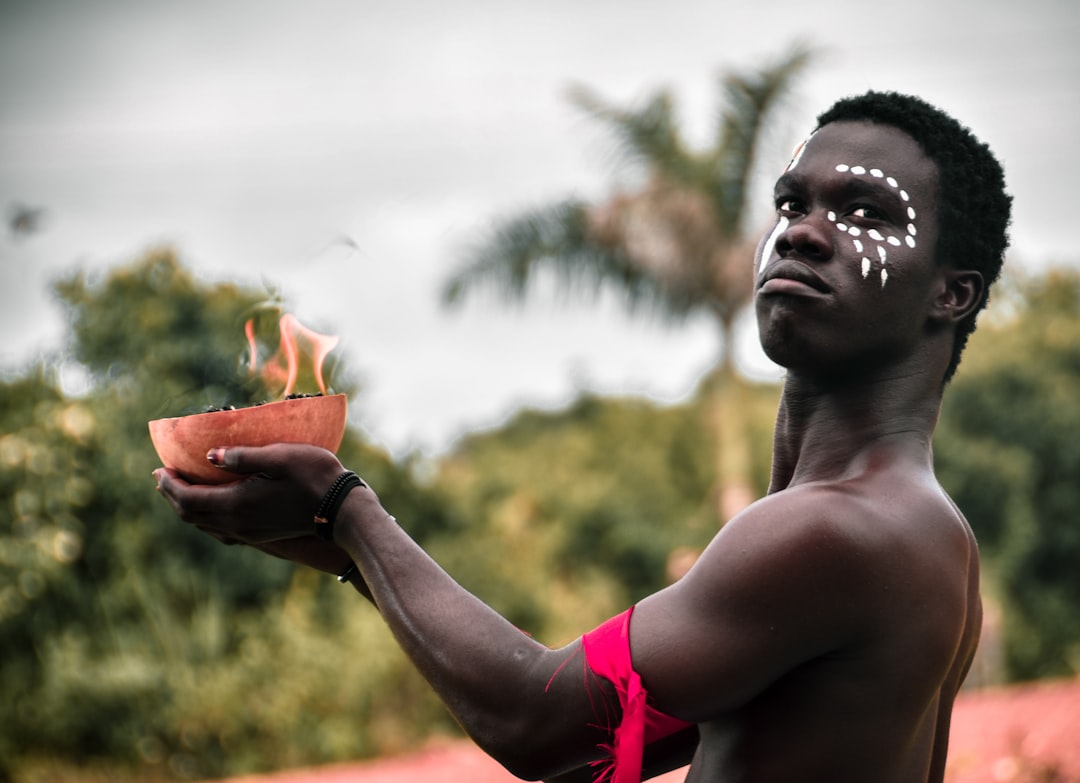
What Happens at an Akwasidae Ceremony
The Royal Procession
The ceremony begins with a procession that is, frankly, breathtaking. Umbrella carriers hold enormous, brightly coloured parasols aloft — each one topped with a golden finial representing the chief’s clan totem. Sword bearers walk in formation, carrying ceremonial blades that have not been used in battle for generations but remain potent symbols of authority. Linguists (the okyeame) carry their staffs of office, each topped with a gold figure that encodes a proverb — a visual language that the initiated can read like a book.
The fontomfrom drums — the massive talking drums of the Ashanti court — announce the arrival of each chief. This drumming is not background music. It is speech. The drums literally articulate the names and praise-titles of the arriving chiefs in the tonal language of the Akan people. If you listen carefully and have a guide to translate, the drums are telling you stories.
The Asantehene Holds Court
When the Asantehene appears, the forecourt falls into respectful silence. He is seated on a carved stool — not the Golden Stool, which is too sacred for public display except on the rarest occasions — and receives his chiefs one by one. Each chief approaches, removes his sandals as a sign of respect, and pays homage according to centuries-old protocol that has not changed since the kingdom was founded.
Libations are poured to the ancestors. Palm wine and sometimes imported schnapps (a tradition dating to early European trade) are offered to the earth and to the spirits of past Asantehenes. The okyeame speaks on behalf of the king, translating his words into the formal, proverbial language of the court — because a king does not speak directly to his subjects. Everything passes through the linguist, whose staff of office gives him the authority to speak the king’s mind.
The Spiritual Nourishment of the Golden Stool
The most sacred element of Akwasidae is the spiritual feeding of the Golden Stool (Sika Dwa Kofi). The Golden Stool is not merely a throne — it is believed to contain the sunsum (collective soul) of the entire Ashanti nation. Its origin story says it was conjured from the sky by the priest Okomfo Anokye in the late 17th century and landed on the lap of Osei Tutu I, the first Asantehene.
During Akwasidae, offerings of food and drink are placed before the Golden Stool in a private inner ritual that is not open to the public. But its occurrence charges the entire ceremony with a gravity that visitors can feel. There is a moment in the proceedings when the air shifts, when the drumming takes on a deeper register, and you understand that what is happening here is not performance — it is communion with the ancestors.

Why Akwasidae Matters for Visitors
Unlike many cultural ceremonies around the world that have been reduced to tourist performances, Akwasidae is completely real. The chiefs who attend are governing leaders with actual jurisdiction over their communities. The rituals performed have legal and spiritual weight within the Ashanti traditional system, which operates alongside Ghana’s democratic government. The Asantehene is not an actor playing a role — he is the head of a kingdom that predates European contact with the Gold Coast by centuries.
Visitors are welcome to observe from designated areas within the palace forecourt. There is no ticket, no velvet rope, no gift shop at the exit. You are simply there, in the presence of a living institution, watching something that your guidebook cannot adequately prepare you for.
For diaspora visitors especially, Akwasidae offers something rare: evidence that African royal traditions did not end with colonialism. They adapted, they endured, and they continue — with the same drums, the same protocols, and the same Golden Stool that has anchored the Ashanti people for over three hundred years. See our complete guide to Ghana festivals for more cultural experiences.
2026 Akwasidae Dates
Because Akwasidae follows the 42-day Akan calendar, the dates shift through the Western calendar. Confirmed 2026 dates:
- February 1
- March 15
- April 26
- June 7
- July 19
- August 30
- October 11
- November 22 — the closest Akwasidae to Ghana’s December travel season. Combine it with your December Ghana trip.
- January 3, 2027 (calculated from the 42-day cycle, not yet independently confirmed — reconfirm closer to the date)
Dates may shift by a day. Check with Manhyia Palace or Akwaaba’s events calendar for confirmed dates.
How to Attend Akwasidae
Getting to Kumasi
Kumasi is a 4-5 hour drive from Accra, or a 1-hour domestic flight via Africa World Airlines or PassionAir. See our Kumasi travel guide for full transport details.
What to Wear
Traditional Ghanaian attire is deeply appreciated and shows respect. For men, a cloth draped over the left shoulder — kente or quality printed fabric. For women, a kaba and slit or any modest traditional outfit. Avoid black or red — these colours are associated with funerals and mourning in Akan culture. White, cream, gold, and bright colours are appropriate.
What to Expect
Arrive early — by 9am at the latest. The palace forecourt fills quickly. You will hear the fontomfrom drums before you see anything. The sound carries across Kumasi and draws you toward the palace like a heartbeat that the entire city shares.
Combine Akwasidae with Kumasi Experiences
Kumasi is Ghana’s cultural capital and deserves more than a day trip:
- Kejetia Market — the largest open-air market in West Africa, with over 10,000 stalls
- Manhyia Palace Museum — the full history of the Ashanti Kingdom
- Bonwire Kente Village — watch master weavers create the cloth that chiefs wear at Akwasidae
- Lake Bosomtwe — a sacred crater lake 30km south of Kumasi
- Kumasi Fort and Military Museum — the Anglo-Ashanti wars brought to life
Akwaaba’s Food Tasting Tour pairs perfectly with an Akwasidae visit — fufu with groundnut soup and kelewele in the cultural capital.
Frequently Asked Questions
Can tourists attend Akwasidae?
Yes. Visitors are warmly welcome. There is a designated observer area within the palace forecourt. No ticket or registration is required, though a knowledgeable local guide significantly enhances the experience.
How long does Akwasidae last?
The main ceremony typically lasts 3-4 hours, from mid-morning to early afternoon. Drumming may begin earlier and celebrations can extend into the evening.
Is Akwasidae the same as Adae Kese?
No. Akwasidae is the regular 42-day ceremony. Adae Kese (the Grand Adae) is a much larger annual event in December where ALL paramount chiefs attend and the Golden Stool is publicly purified. Think of it as Akwasidae’s grand finale.
Is photography allowed?
Yes, from the visitor area. Do not use flash near the Asantehene or chiefs. Never attempt to photograph the Golden Stool if it is present.
What is the Golden Stool?
The Sika Dwa Kofi is the sacred symbol of the Ashanti nation. According to tradition, it descended from the sky in the late 17th century and contains the collective soul of the Ashanti people. It is never sat upon — even by the king. It has its own throne, its own attendants, and its own ceremonial schedule.
Book This Experience
Witness Akwasidae at Manhyia Palace
Akwaaba runs a guided Akwasidae Festival Durbar experience at Manhyia Palace, Kumasi — real access to the ceremony described in this guide, from $175.
How do I find the next Akwasidae date?
Check Akwaaba’s 2026 Ghana festivals calendar or contact Manhyia Palace directly. The 42-day cycle means there are 8-9 ceremonies per year.


EVENTS IN GHANA
What's On in Ghana This Week
Festivals, concerts, cultural events, and experiences — updated every week.
Browse Events →
Lock in your Ghana trip for just $100 down
Flights, vetted stays, local guides and SanlamAllianz insurance — all handled. Reserve your spot with $100, pay the balance later.
FROM @AKWAABA.APP
See What Ghana Actually Looks Like
Our six latest posts on Instagram