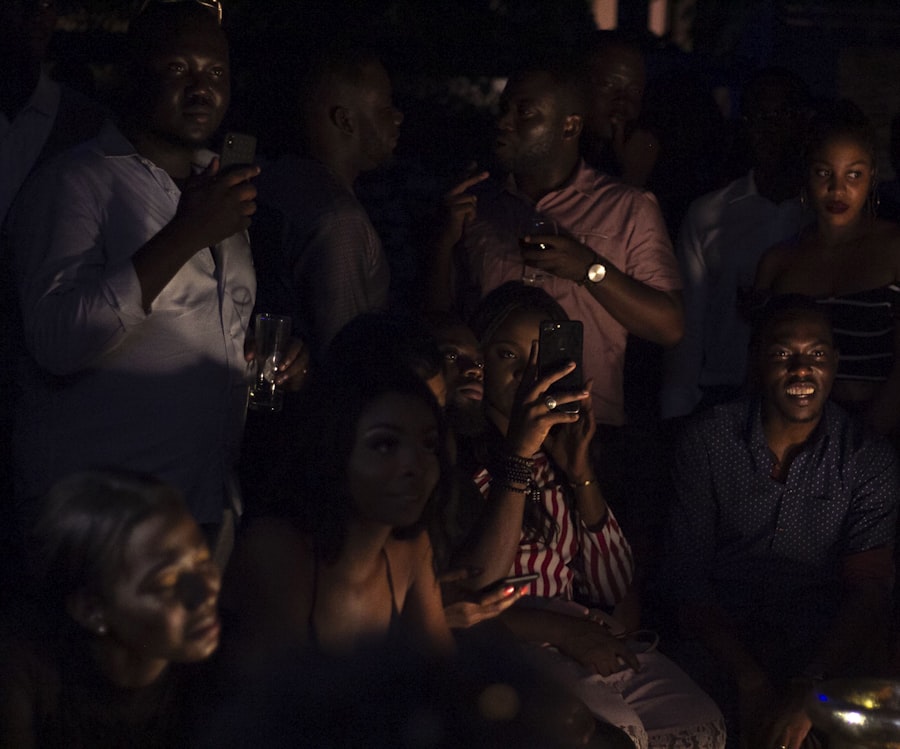
Ghana vs Nigeria
Two West African giants. Two completely different journeys. An honest comparison for diaspora travelers deciding where to go first — or next.
Quick Verdict
Ghana is the easier entry point. Nigeria is the deeper dive. Both will change you — but they’ll do it differently.
| Factor | Nigeria | Ghana |
|---|---|---|
| Best for first-time Africa visitors | Advanced | Recommended |
| US State Dept safety level | Level 3 — Reconsider Travel | Level 2 — Exercise Caution |
| Visa for US/UK/Canada citizens | Yes — complex process | Yes — ~$150, straightforward online |
| Tourism infrastructure | Developing | Established |
| Afrobeats music scene | The source (Lagos) | Major scene — AfroFuture, Detty Dec |
| Ancestry/slavery heritage sites | Badagry slave route | Cape Coast, Elmina — purpose-built |
| Food culture | Extraordinary | Extraordinary |
| Average 7-day cost | $3,000–$5,000 (Lagos) | $2,500–$4,500 |
| English widely spoken | Yes (official) | Yes (official) |
| December party season | Lagos December is electric | Detty December — global event |
| Curated diaspora packages | Limited | Akwaaba packages from $499 |
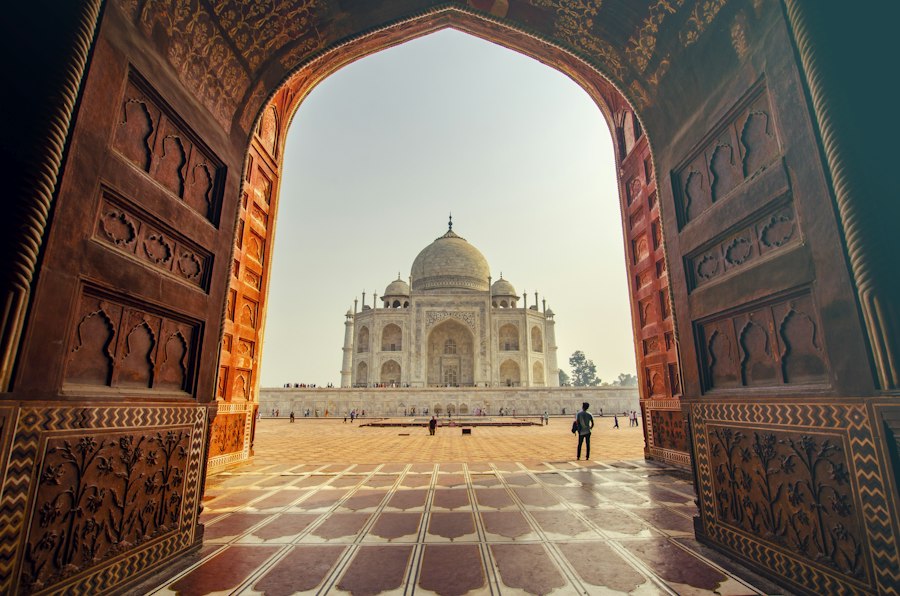
Two Giants, Two Different Journeys
Nigeria and Ghana are neighbours who have been competing — and collaborating — for generations. The jollof rice wars are merely the most publicly visible manifestation of a much deeper rivalry.
For diaspora travelers deciding where to go first, the choice between Ghana and Nigeria is genuinely consequential. Not because one is better in some absolute sense — both countries are extraordinary — but because they offer fundamentally different journeys. Ghana is often called “Africa’s gateway” not dismissively, but because it has deliberately built an infrastructure to welcome diaspora visitors: organised heritage sites, GTA-licensed operators, a thriving English-speaking tourism industry, and the Year of Return legacy that specifically invited the global diaspora home. Arriving in Accra for the first time as a Black American or Black British traveler is designed to feel accessible.
Nigeria is something different. Lagos is one of the most intensely alive cities on earth — 15 million people in permanent motion, Afrobeats blasting from every street corner, suya grilling at midnight, a fashion scene that devours trends before the rest of the world has even noticed them. Nigeria’s economy is the largest in Africa. Its cultural output — Burna Boy, Davido, Wizkid, Nollywood, Afrobeats itself — is reshaping global popular culture in real time. A first visit to Lagos is not a gentle introduction to Africa. It is a full-contact immersion into one of humanity’s most kinetic cities.
Ama, Akwaaba’s AI trip planner, builds a personalised Ghana itinerary around your budget, dates, and interests — free, in under 2 minutes. Try it now →
The Case for Ghana
Ghana has spent the last decade deliberately building the infrastructure for diaspora homecoming — and it shows.
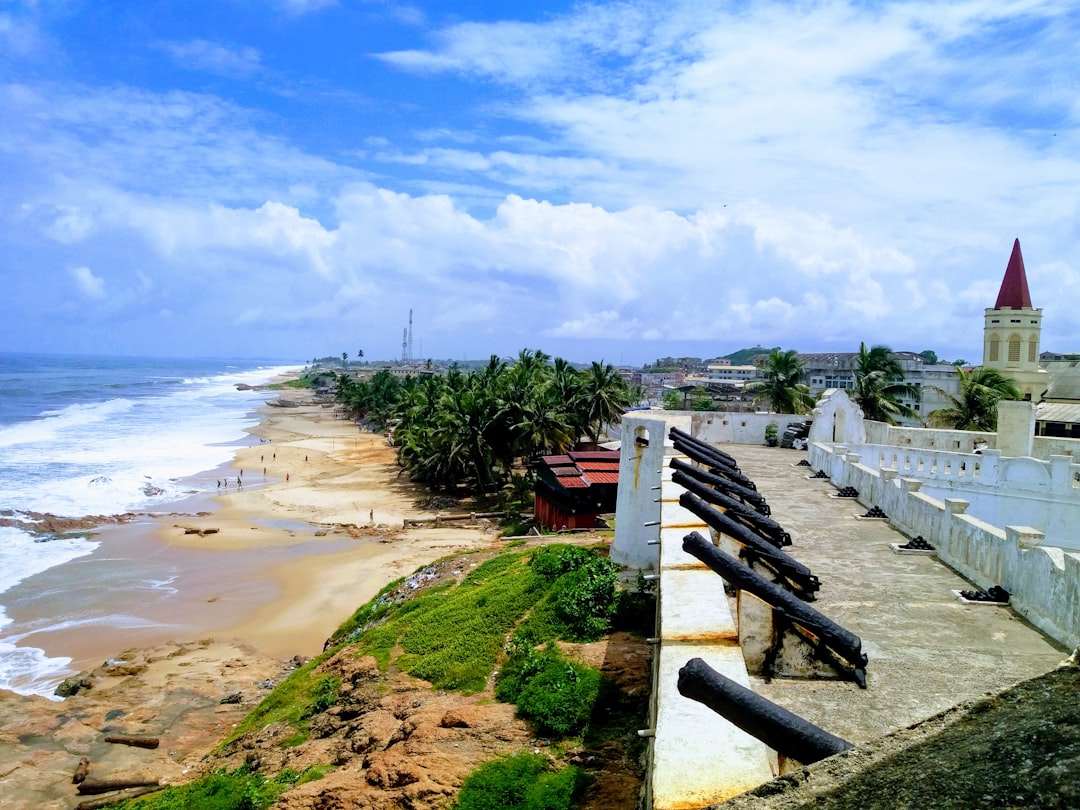
Start with what Ghana has that nowhere else can replicate: Cape Coast Castle and the Door of No Return. Historians estimate that 30–40% of the Africans transported to the Americas in the transatlantic slave trade departed from what is now Ghana — from the Fante, Ashanti, Ga, and Ewe peoples. The fortresses at Cape Coast and Elmina are not reconstructions or museums in the conventional sense. The dungeons are original. The Door of No Return is the literal exit through which enslaved Africans walked onto the ships. Standing in that space as a descendant is not sightseeing — it is confrontation with history made physical. There is nothing in Nigeria that offers an equivalent experience for the African American diaspora specifically.
Ghana also has the infrastructure advantage for first-time visitors. Kotoka International Airport is manageable, the immigration process is straightforward, and English is spoken everywhere. The country has been actively welcoming diaspora visitors through the Year of Return programme since 2019. From curated packages to the AI trip planner, the ecosystem around a Ghana visit is developed in a way that Nigeria’s tourism sector is still building. Our complete Ghana travel guide covers the entire country — the coast, the north, the festivals, the food.
And then there is Detty December — the annual late-December season that has become the most talked-about Black diaspora travel event in the world. The Accra nightlife scene, AfroFuture, and the cultural festivals that run year-round — from Homowo to Chale Wote — give Ghana a cultural calendar that rewards return visits. The north of the country, the coastline, and the adventure activities available through Ghana make it a country you can return to ten times and still find something new.
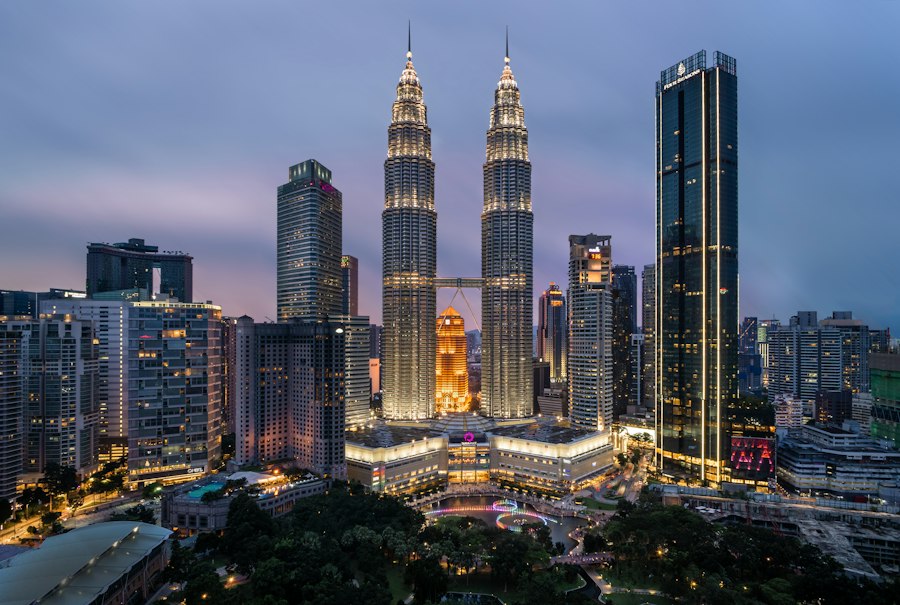
The Case for Nigeria
Lagos is not for the faint-hearted. It is also the most alive city many visitors will ever experience.
Let’s start with the music, because you cannot understand Lagos without it. Afrobeats — the genre that has reshaped global popular music, that has brought Burna Boy, Davido, and Wizkid to stadiums on every continent — was born in Lagos. The clubs of Victoria Island and Lekki are not venues where Afrobeats is played as background music: they are where it is made, refined, argued over, and celebrated by the people who created it. An Afrobeats pilgrim who has never been to Lagos has never been to the source. That matters.
Beyond the music, Nigeria’s scale is staggering. A population of 220 million people representing over 250 ethnic groups — Yoruba, Igbo, Hausa, Fulani, Ijaw, and hundreds more — means a cultural depth that rewards years of exploration. The Yoruba diaspora, which spread through the slave trade to Brazil, Cuba, Trinidad, and the United States, is one of the most globally dispersed African cultural traditions in existence. Candomblé in Brazil, Santería in Cuba, Trinidadian orisha — these are Yoruba traditions that survived the Middle Passage. For diaspora travelers with roots in those traditions, Lagos and the southwest of Nigeria offer a roots connection as profound as anything Ghana provides.
The food deserves its own paragraph. Suya (spiced grilled meat) eaten at a roadside stall at midnight. Jollof rice cooked in the way that started the international argument. Egusi soup, pounded yam, moin moin, chin chin, akara. Lagos has a restaurant scene that has been building rapidly, with high-end dining alongside street food culture that operates twenty-four hours a day.
The Jollof Wars are real. We are not picking a side. Visit both countries and decide for yourself.

Head-to-Head: 6 Deciding Factors
1. Safety — Ghana Has the Clearer Advantage
The US State Department rates Ghana at Level 2: Exercise Increased Caution — the same rating given to the United Kingdom, Germany, and most of Western Europe. Ghana has a stable democratic government, functioning rule of law, and a track record of welcoming international tourists without incident. Petty theft in crowded markets is the primary concern, as in any major city globally. The country has not experienced significant political instability in decades. Our solo travel guide covers safety in practical detail for first-time visitors.
Nigeria carries a Level 3: Reconsider Travel advisory — the second-highest level issued by the State Department. Lagos’s affluent zones — Victoria Island, Ikoyi, Lekki Phase 1 — are considerably safer than the general advisory implies, and millions of expatriates live and work there without incident. But the safety calculus requires more active planning in Nigeria than in Ghana, and first-time travelers should go with local contacts or established tour operators.
2. Visa — Ghana’s Process is More Straightforward
Both countries require visas for US, UK, and Canadian citizens. Ghana’s process is conducted entirely online through the Ghana Immigration Service portal, costs approximately $150, and typically processes in 3–5 business days. Our Ghana visa guide for 2026 walks through every step. Nigeria’s visa process requires a letter of invitation from a Nigerian national or business entity for many nationalities, and processing times are less predictable. For spontaneous or first-time travel planning, Ghana’s visa infrastructure removes friction that Nigeria still carries.
3. Cost — Ghana Comes in Below Lagos
This one surprises people. Lagos is expensive — accommodation in the safe zones (Victoria Island, Ikoyi, Lekki) runs $150–$400 per night at trusted hotels. A 7-day Lagos trip for a diaspora visitor using reputable infrastructure costs $3,000–$5,000. A well-planned 7-day Ghana trip runs $2,500–$4,500, with Akwaaba’s all-inclusive packages starting from $499 for shorter visits. Exchanging cash to Ghana cedis locally gives you better rates than card spending. Ghana comes in below Lagos for equivalent-quality accommodation and experiences.
4. The Heritage Question — Depends on Your Ancestry
For African Americans whose ancestors were taken from the Gold Coast region — the Fante, Ashanti, Ga, Ewe peoples — Ghana offers the most direct heritage connection available anywhere in the world. Cape Coast Castle is a UNESCO World Heritage site built for this reckoning. The Roots & Legacy Tour and Ghana History & Heritage Tour are designed specifically for diaspora travelers making this homecoming journey. Ghana’s Panafest festival is dedicated entirely to celebrating Pan-African heritage.
For African Americans with Yoruba or Igbo ancestry — or for those whose cultural connections run through Brazil, Cuba, or Trinidad where Yoruba traditions survived — Nigeria offers equivalent depth. The honest answer is: if you know your ancestry, follow it. If you don’t — and most African Americans don’t, because that record was deliberately destroyed — Ghana’s diaspora welcome infrastructure is more developed for visitors making that search.
5. Music & Nightlife — Nigeria Has the Source, Ghana Has the Season
Afrobeats was made in Lagos. Burna Boy is from Port Harcourt. Davido and Wizkid are Lagos artists. The music that is now filling arenas in London, New York, and Paris originated in the clubs of Victoria Island. If your travel motivation is Afrobeats pilgrimage — going to where the sound comes from — Lagos is the answer.
That said, Ghana is where the global diaspora gathers to celebrate that music collectively. AfroFuture and Detty December in Accra have become the annual gathering point for the African diaspora globally. A Lagos-then-Accra December itinerary is increasingly common among serious Africa travelers. Check the Detty December packages comparison if you’re planning the Ghana leg.
6. Food — Both Win, in Different Ways
We refuse to pick a winner here. Ghana’s street food — jollof, waakye, banku, kelewele, kontomire stew, red-red — is extraordinary and deeply tied to specific regions and communities. A food tour through Accra’s markets or a cooking class with a local family is one of the best experiences available to any visitor. Nigeria’s culinary tradition is equally deep and more diverse by volume — 250 ethnic groups means 250 distinct food traditions. Suya from a Hausa street vendor at 1am in Lagos is one of the great street food experiences on earth. The jollof wars continue. Visit both countries and settle the debate yourself.

Ghana + Nigeria: Why Not Both?
For the serious Africa traveler, this isn’t either/or.
Accra to Lagos is approximately a two-hour flight on local carriers — making a combined Ghana-Nigeria itinerary genuinely practical for a two-week trip. The most common diaspora pattern: arrive in Accra, spend 7–8 days covering the heritage sites, festivals, and Accra’s neighbourhoods, then fly to Lagos for 4–5 days of music, food, and energy at maximum volume. The contrast between the two cities — Accra’s deliberate warmth versus Lagos’s kinetic intensity — makes the combined experience richer than either city alone.
Akwaaba’s West Africa multi-country tours are designed for exactly this traveler. If you’re planning your first Africa trip and want to do it properly, a Ghana itinerary as the foundation — and Lagos as the extension — is one of the best things you can do with two weeks of your life. Use the AI trip planner to map the Ghana leg first, then build out from there.
Download the Akwaaba App
Browse Ghana packages, manage your booking, access your itinerary offline, and get real-time trip support — all from your phone. Available on iOS and Android.
Who Should Choose Each Destination
Choose Ghana First If…
- This is your first time visiting Africa
- You want Cape Coast Castle and a specific ancestry connection
- You’re traveling in December for Detty December or AfroFuture
- You want an all-inclusive, guided experience with minimal logistics
- You’re going with a group or a solo traveler
- You want to explore beyond one city — beaches, north, Volta Region
- You want AI-assisted planning and end-to-end support
- You want a honeymoon or corporate retreat destination
Choose Nigeria If…
- You have Nigerian family or personal connections
- Afrobeats pilgrimage is your primary motivation — Lagos is the source
- You’re a food adventurer who wants maximum culinary intensity
- You’ve already done Ghana and want the next level of West Africa
- You have Yoruba or Igbo ancestry and want to trace it specifically
- You’re a business traveler with Lagos commercial ties
More Ghana Travel Guides
Plan every part of your Ghana trip — from visa to itinerary to Detty December packages.
Let Ama Plan Your Ghana Trip — Free
Ama is Akwaaba’s AI trip planner. Tell her your budget, travel dates, group size, and what matters most to you — she’ll build a personalised Ghana itinerary in under 2 minutes. No sign-up, no commitment.
Frequently Asked Questions
By official measures, Ghana is safer. The US State Department rates Ghana at Level 2: Exercise Increased Caution and Nigeria at Level 3: Reconsider Travel. In practice, tourists visiting Lagos’s safe zones (Victoria Island, Ikoyi, Lekki) with proper preparation have positive experiences. But Ghana requires less active safety planning for first-time visitors, and its tourism infrastructure is specifically designed to make the diaspora visit smooth. Read our Ghana safety guide for detailed information.
Yes — and many serious Africa travelers do exactly this. Accra to Lagos is roughly a two-hour flight on local carriers. A two-week itinerary of 8–9 days in Ghana followed by 4–5 days in Lagos is practical and increasingly popular with diaspora travelers who want to experience both countries. Akwaaba’s West Africa multi-country tours are designed for this exact itinerary. Start with Ghana for the heritage and easier onboarding, then move to Lagos for the music and intensity.
Yes, US citizens need visas for both countries. Ghana’s visa is applied for entirely online through the Ghana Immigration Service, costs approximately $150, and processes in 3–5 business days in most cases. Our full Ghana visa guide for 2026 covers every step. Nigeria’s visa process requires more documentation — including an invitation letter from a Nigerian national or business for many nationalities — and has longer and less predictable processing times. Apply for both well in advance of travel.
Ghana edges Nigeria for beach visitors. Ghana’s coastline includes Labadi Beach outside Accra, the surf-friendly Kokrobite, and Busua in the Western Region — all beautiful, relatively uncrowded, and close to other tourist infrastructure. Nigeria has Elegushi Beach and Tarkwa Bay in Lagos, which are popular with locals and expats but not as developed as Ghana’s best beaches. If beach time is a priority on your West Africa trip, Ghana is the clearer choice.
Generally yes, especially for accommodation. Lagos hotels in safe, tourist-friendly zones (Victoria Island, Ikoyi) run $150–$400 per night. A Ghana trip at equivalent quality runs $100–$250 per night for good accommodation, and Akwaaba’s all-inclusive packages start from $499 for shorter visits. Overall, a well-planned Ghana trip typically comes in $500–$1,000 lower than an equivalent Lagos trip for the same duration.
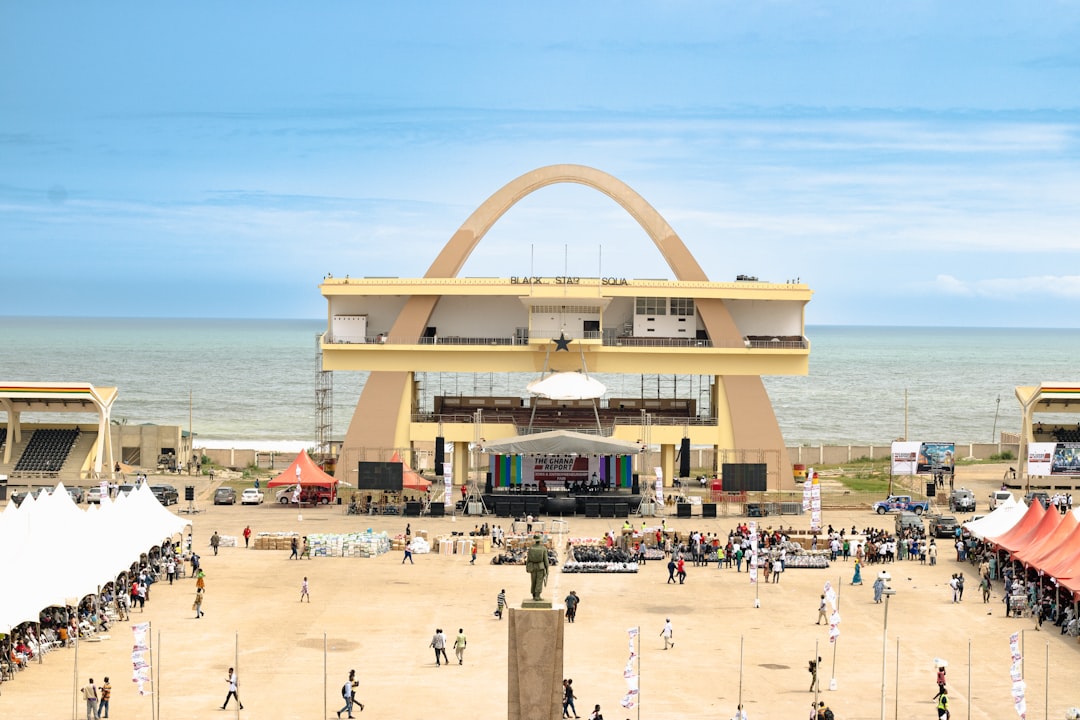
For a 7-day first visit, the classic Ghana itinerary covers: Days 1–2 in Accra (Independence Square, Makola Market, Osu for food and nightlife), Days 3–4 on the Central Region heritage circuit (Cape Coast Castle, Elmina, Kakum National Park canopy walk), Day 5 back to Accra for a cooking class or cultural experience, Days 6–7 exploring beyond the city. Our full 7-day Ghana itinerary maps this in detail, and you can use the AI trip planner to build a personalised itinerary based on your interests and travel dates.
Start with Ghana — Your Gateway to West Africa
First time or returning, Ghana meets you exactly where you are. Browse curated packages or build your own itinerary free with Ama, our AI trip planner.
EVENTS IN GHANA
What's On in Ghana This Week
Festivals, concerts, cultural events, and experiences — updated every week.
Browse Events →REAL TRIPS · REAL PEOPLE
See What Ghana Actually Looks Like
From our travelers’ feeds — unfiltered Ghana experiences